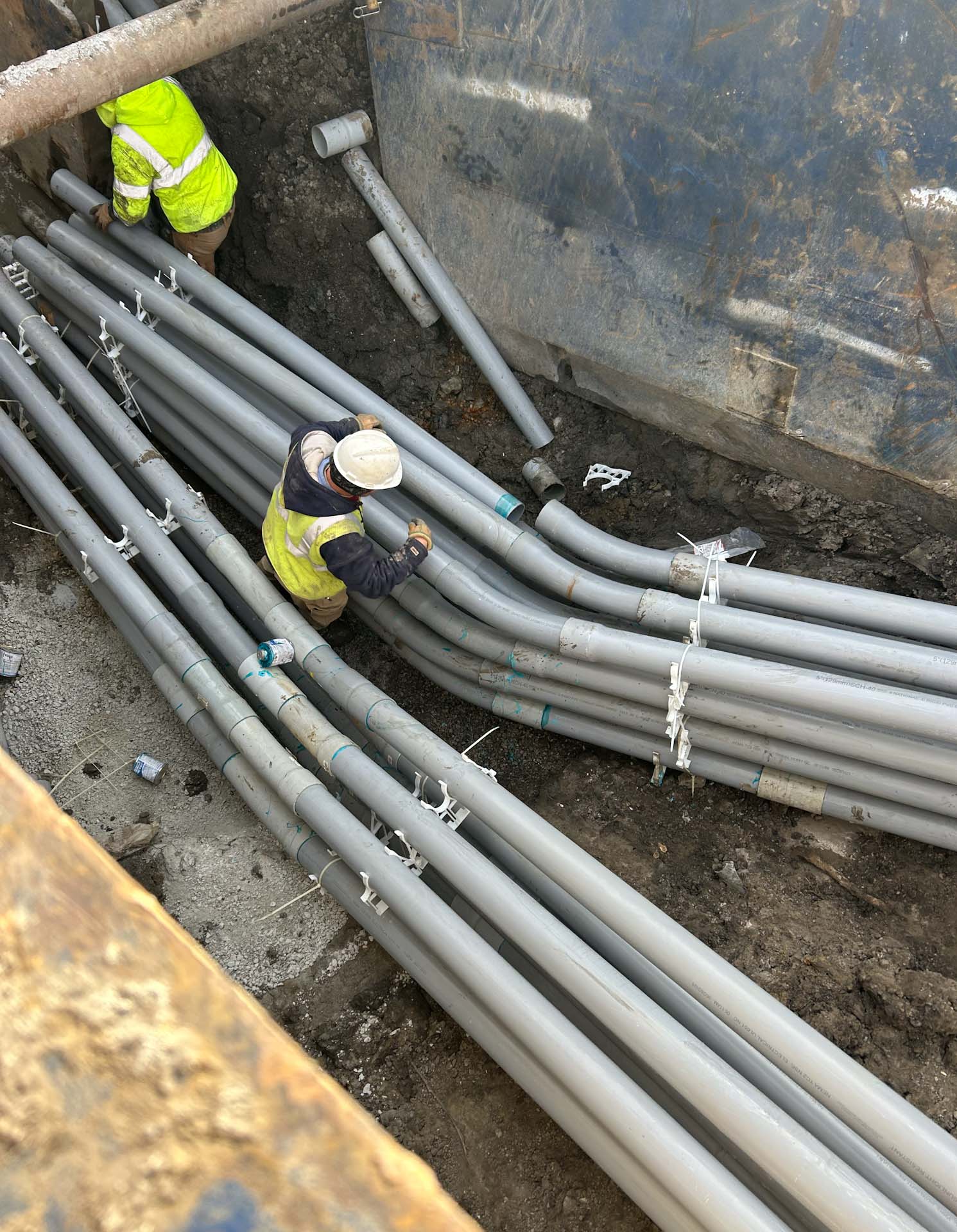
Cold weather, de-watering and deep shoring were some the factors with the potential to slow the project and alter the schedule.
Highway Expansion Causes Distribution Power Relocation
Project Case Study: Complex Duct Bank Installation Under Adverse Conditions.
Company: Electric Conduit Construction (ECC)
Location: Highway Interchange Expansion Midwest
Scope: Installation of a new 2,000-foot underground duct bank system, connecting five new pre-cast manholes and tying into existing 36” & 48” steel encased ducts.
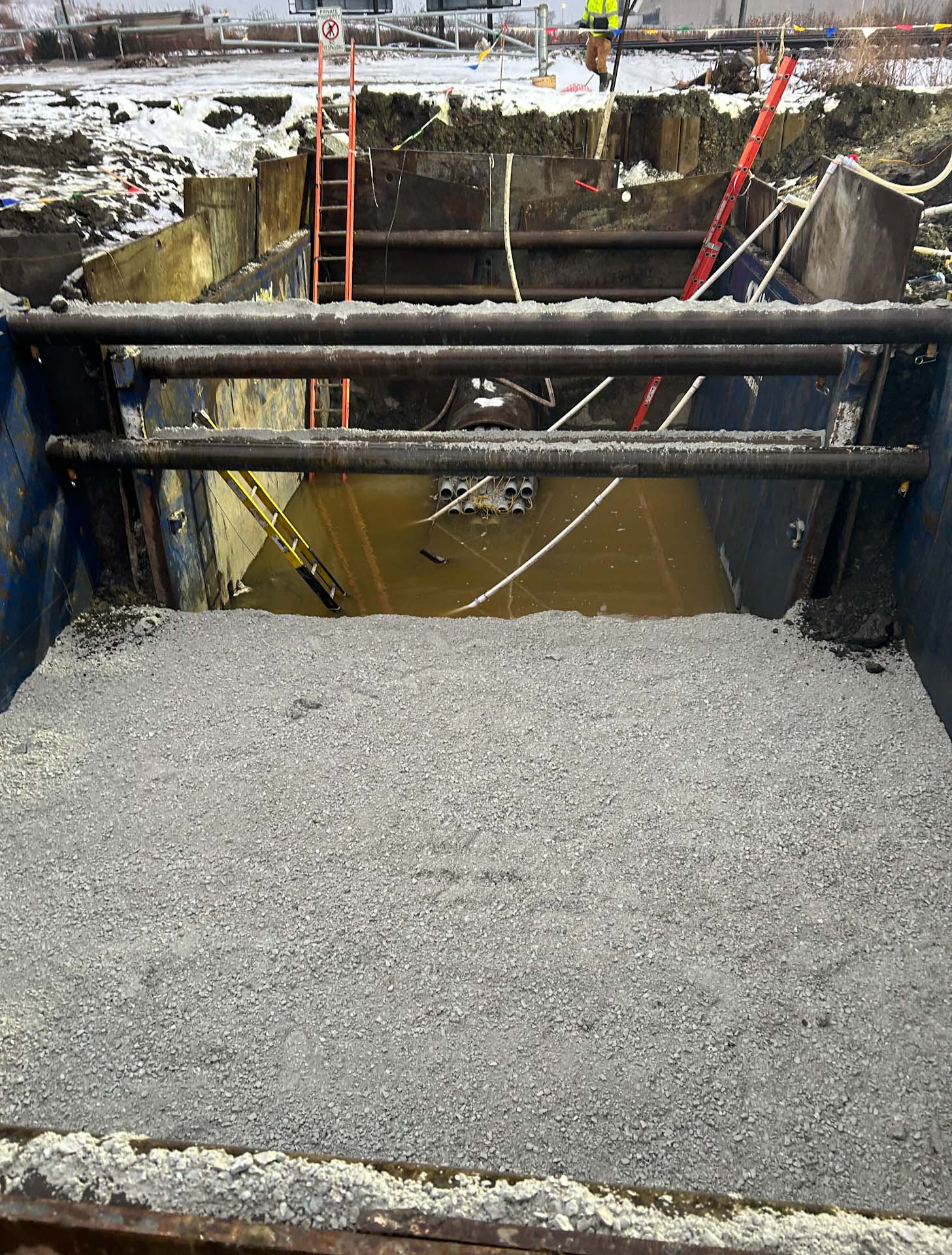
Challenge: Execution during the difficult winter months, requiring deep trench excavation and complex tie-in procedures. The original drawings called for trenches up to 32 feet deep in certain sections. This created the need for engineering the shoring system. Comparing this to the cost of removing over 10 feet of earth, the decision was made to excavate. This eliminated the engineered shoring.
Scope of Work (SOW) Highlights:
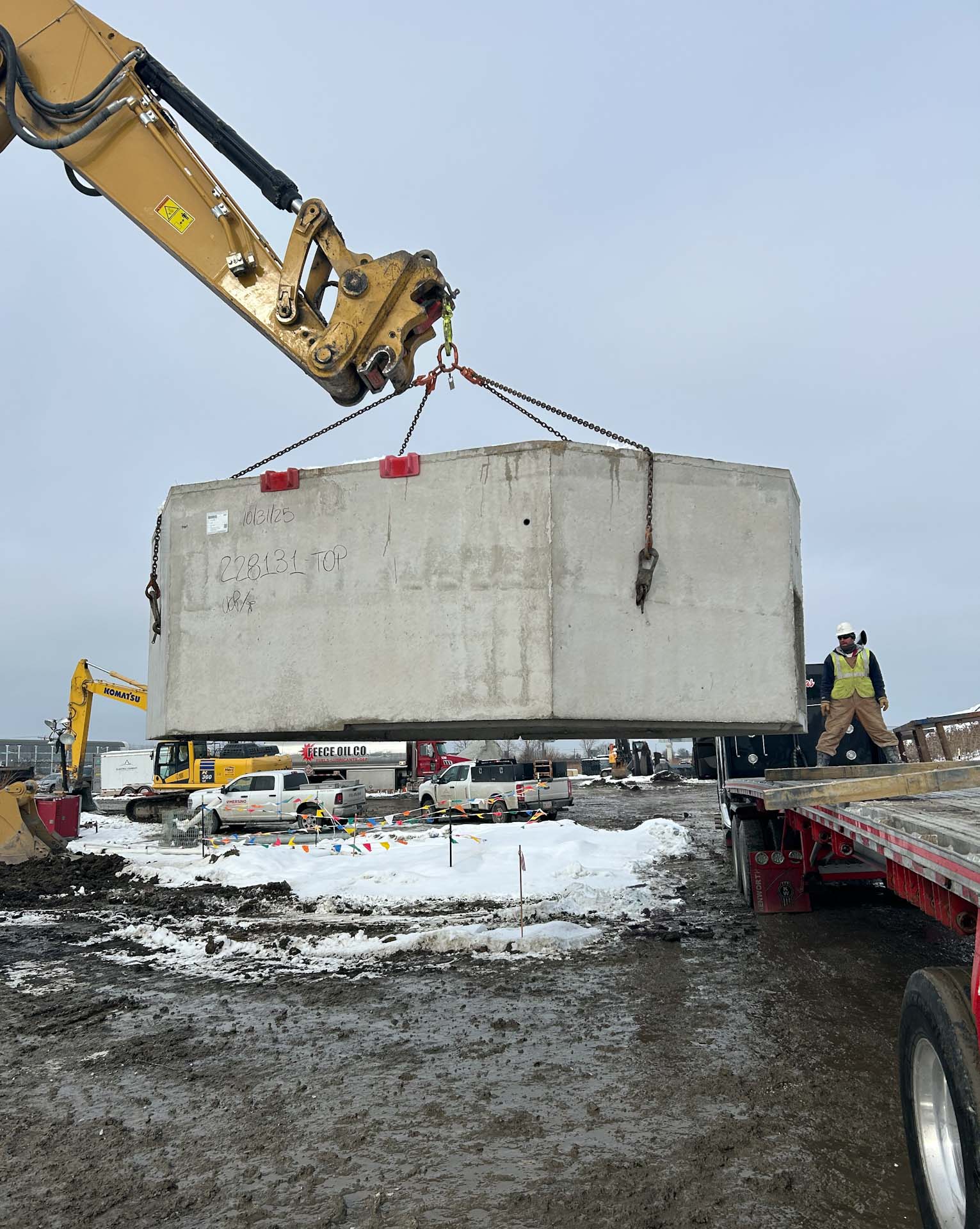
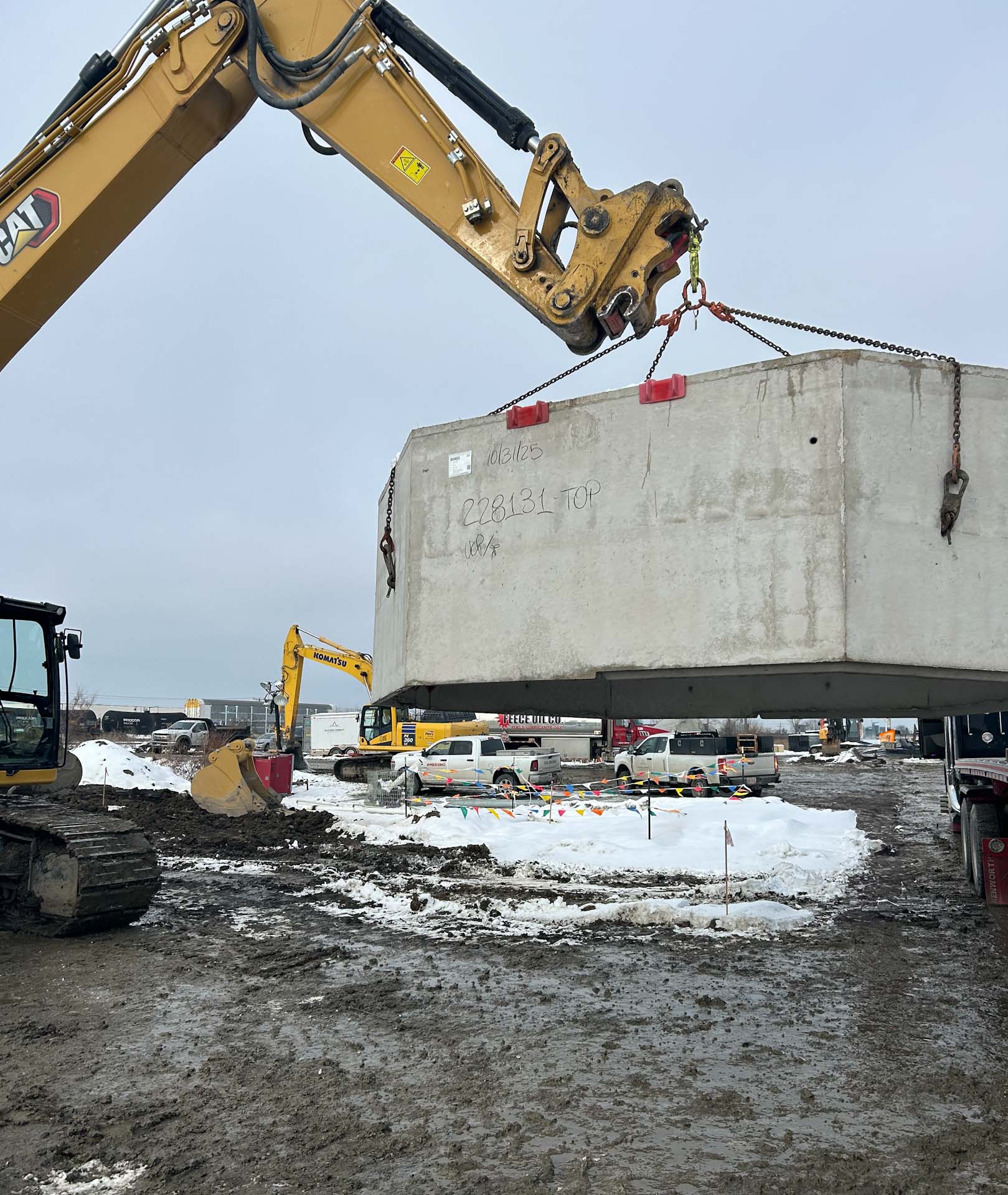
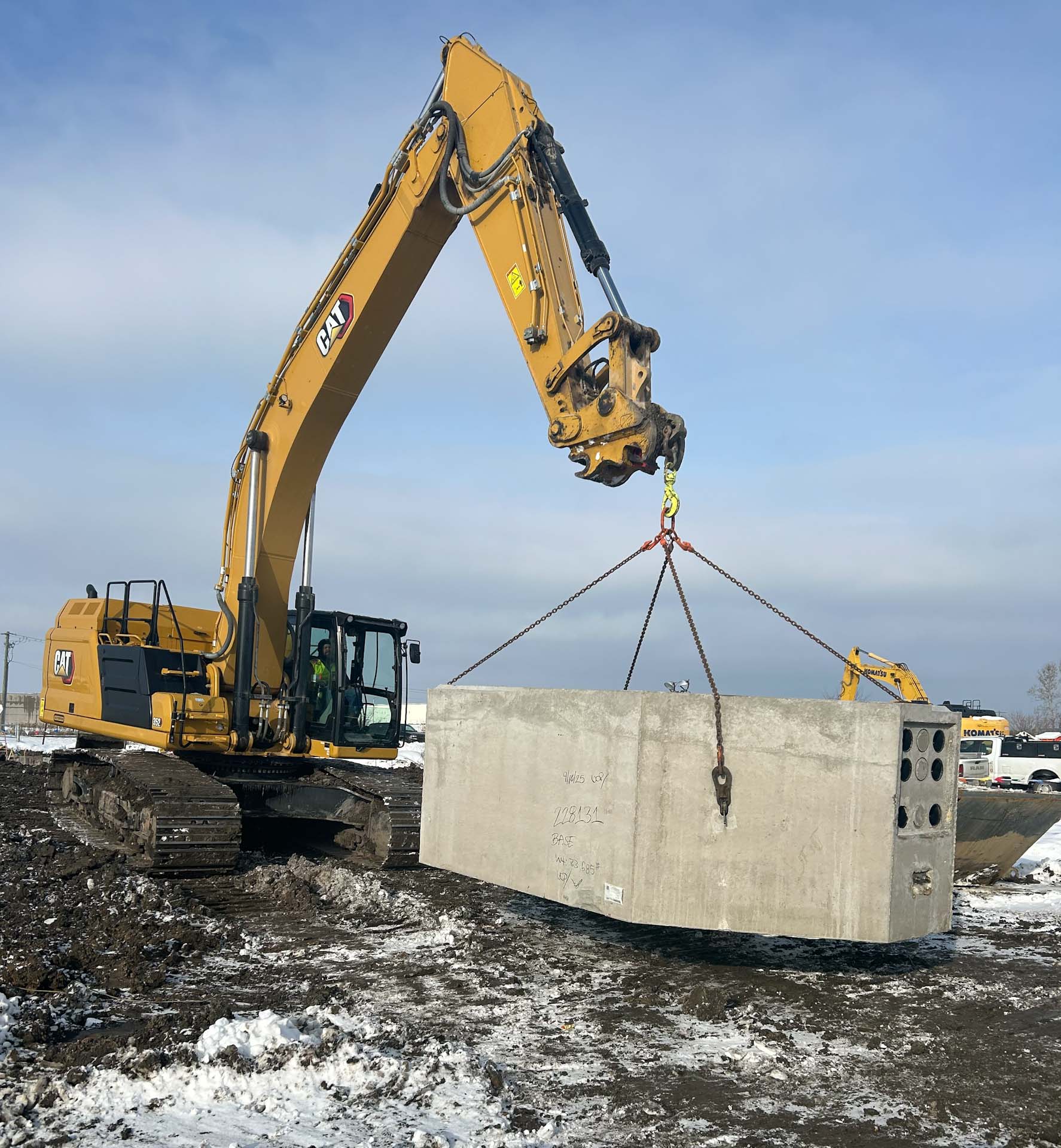
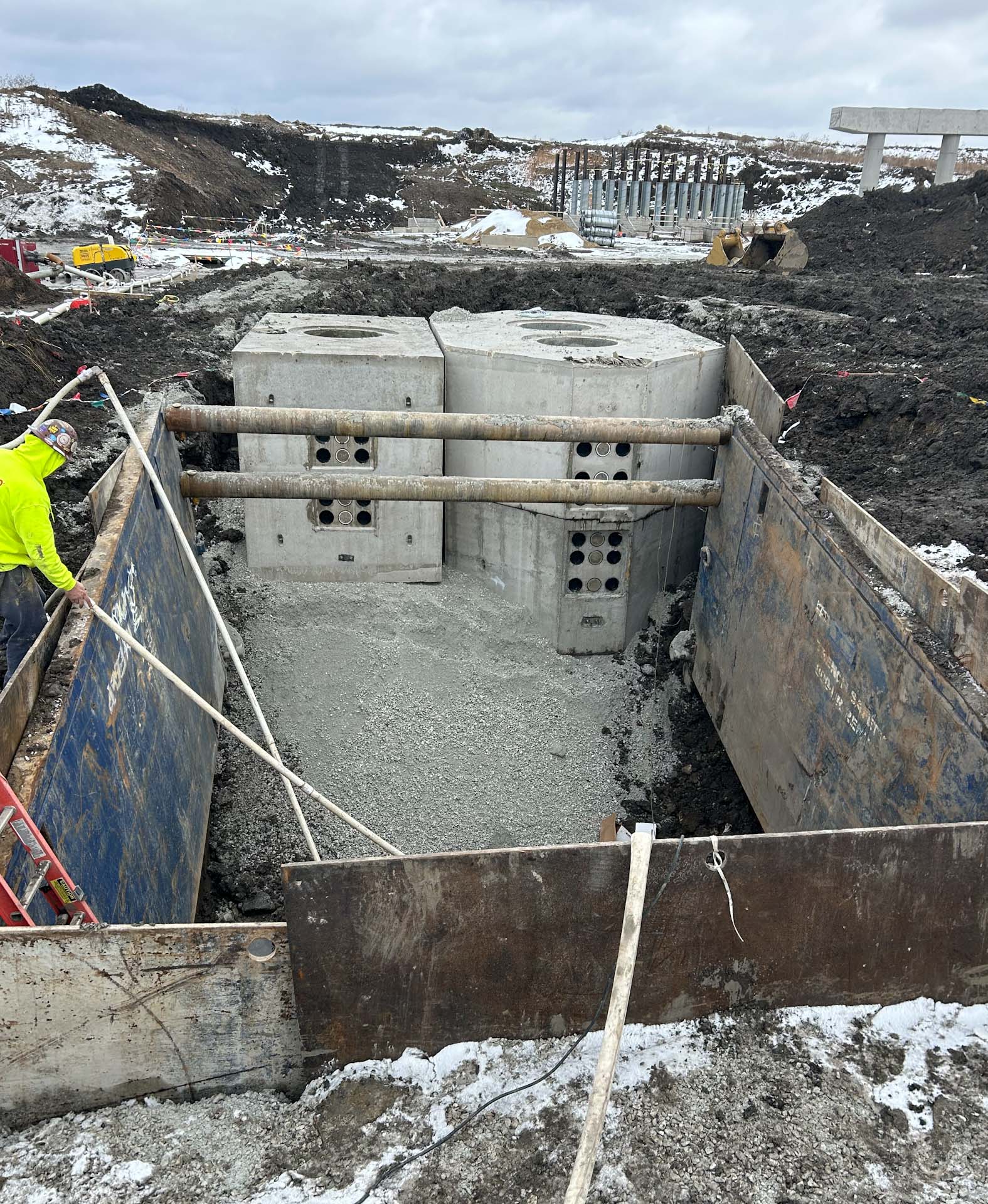
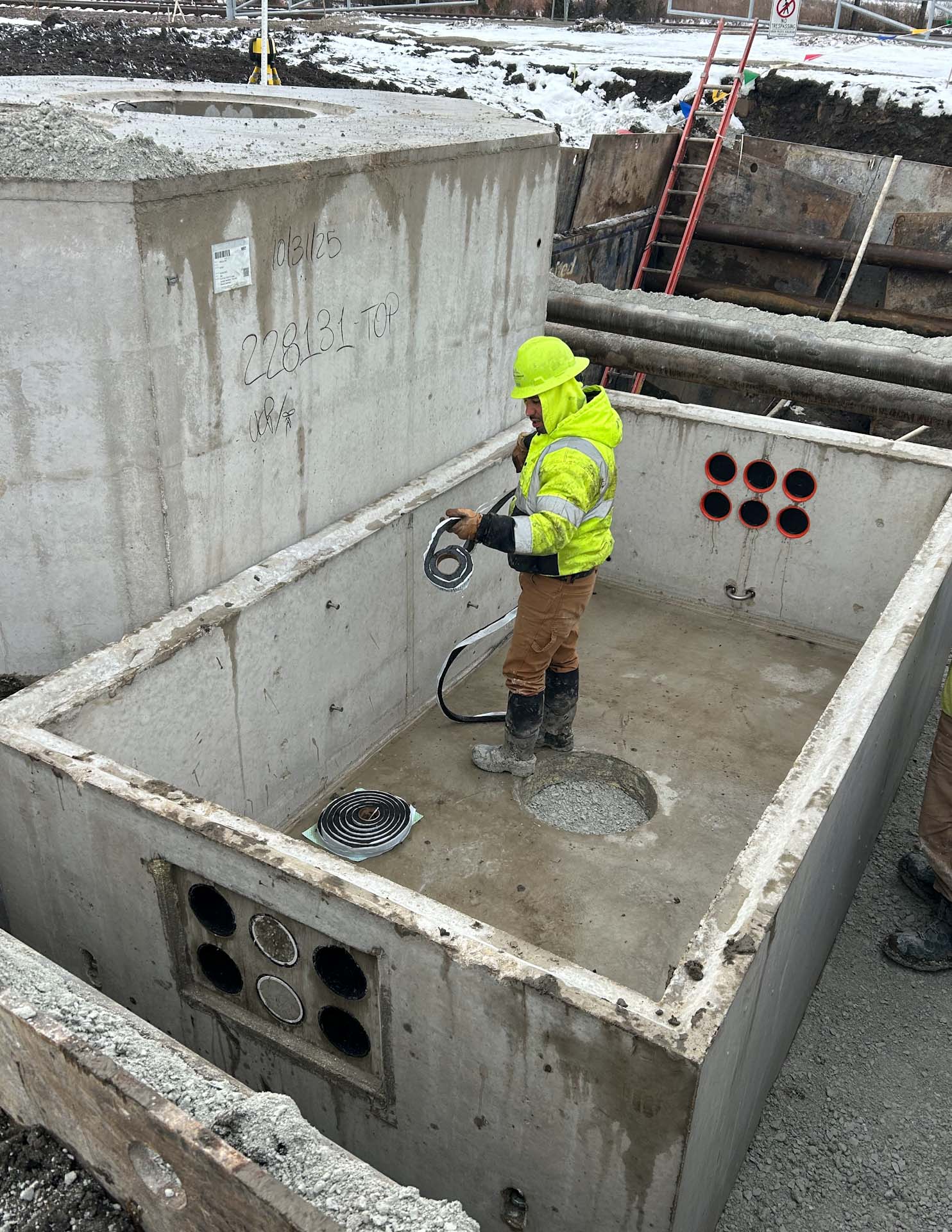
The project involved the installation of a total duct run of 2,000 feet, broken down into four distinct runs, each approximately 500 feet in length. With each duct bank tied connected into 9’ x 15’ x 9’ high manholes. At the project terminus the ducts will be capped and enclosed in a standpipe in anticipation of the project’s continuation.
Infrastructure:
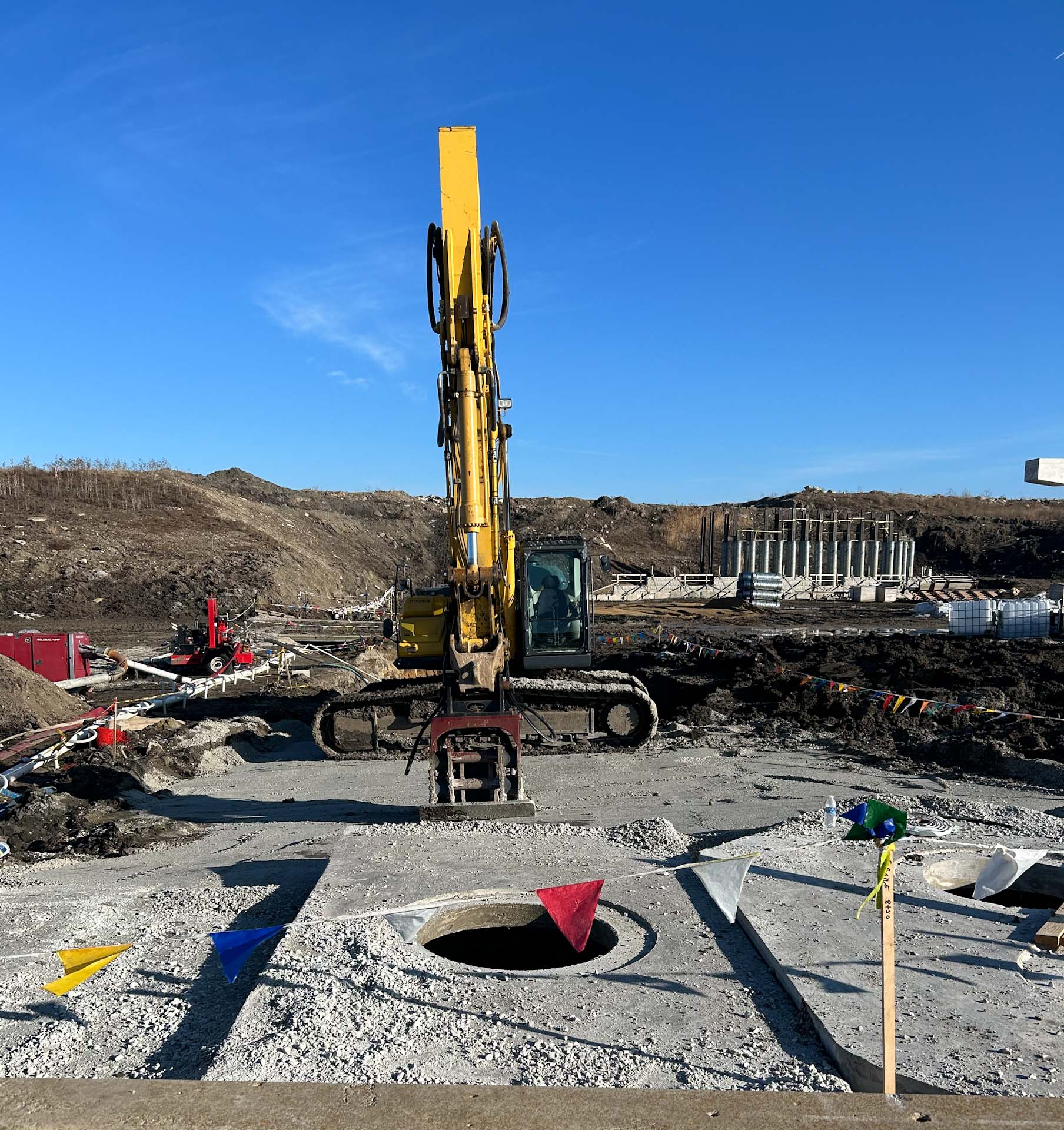
- Terminations: Each 500-foot run began and ended in a new 9' x 15' x 9' deep pre-cast manhole, providing robust and accessible termination points.
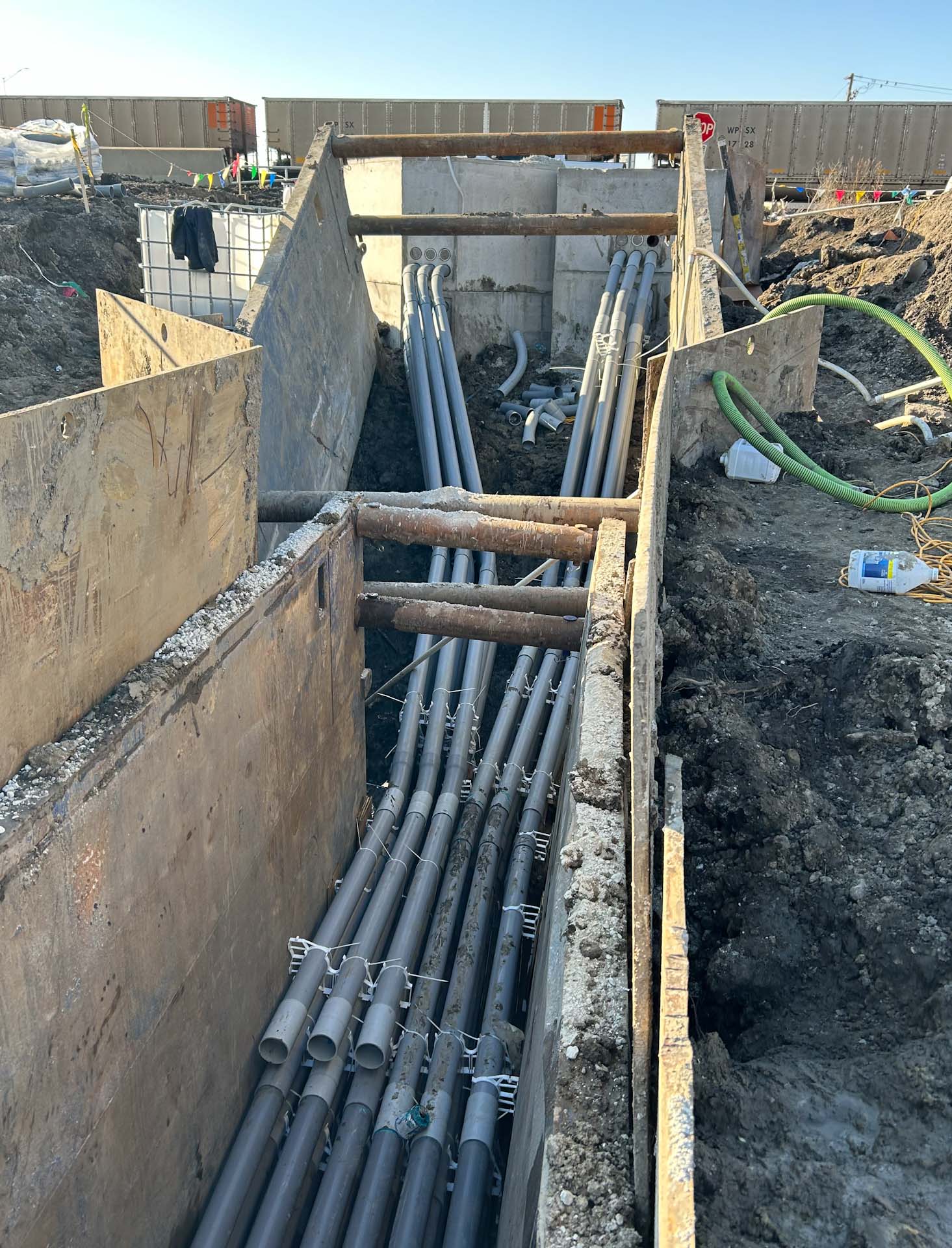
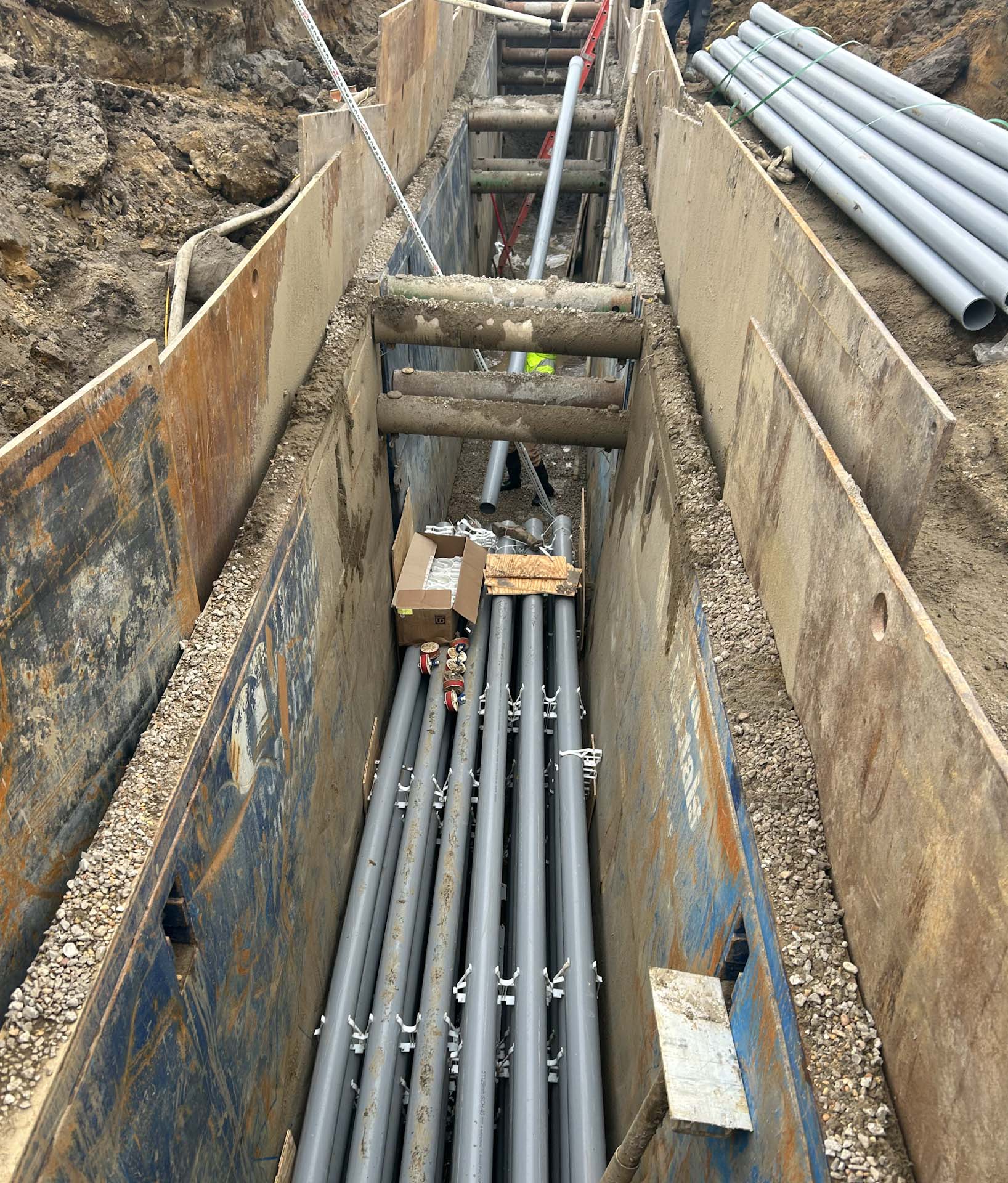
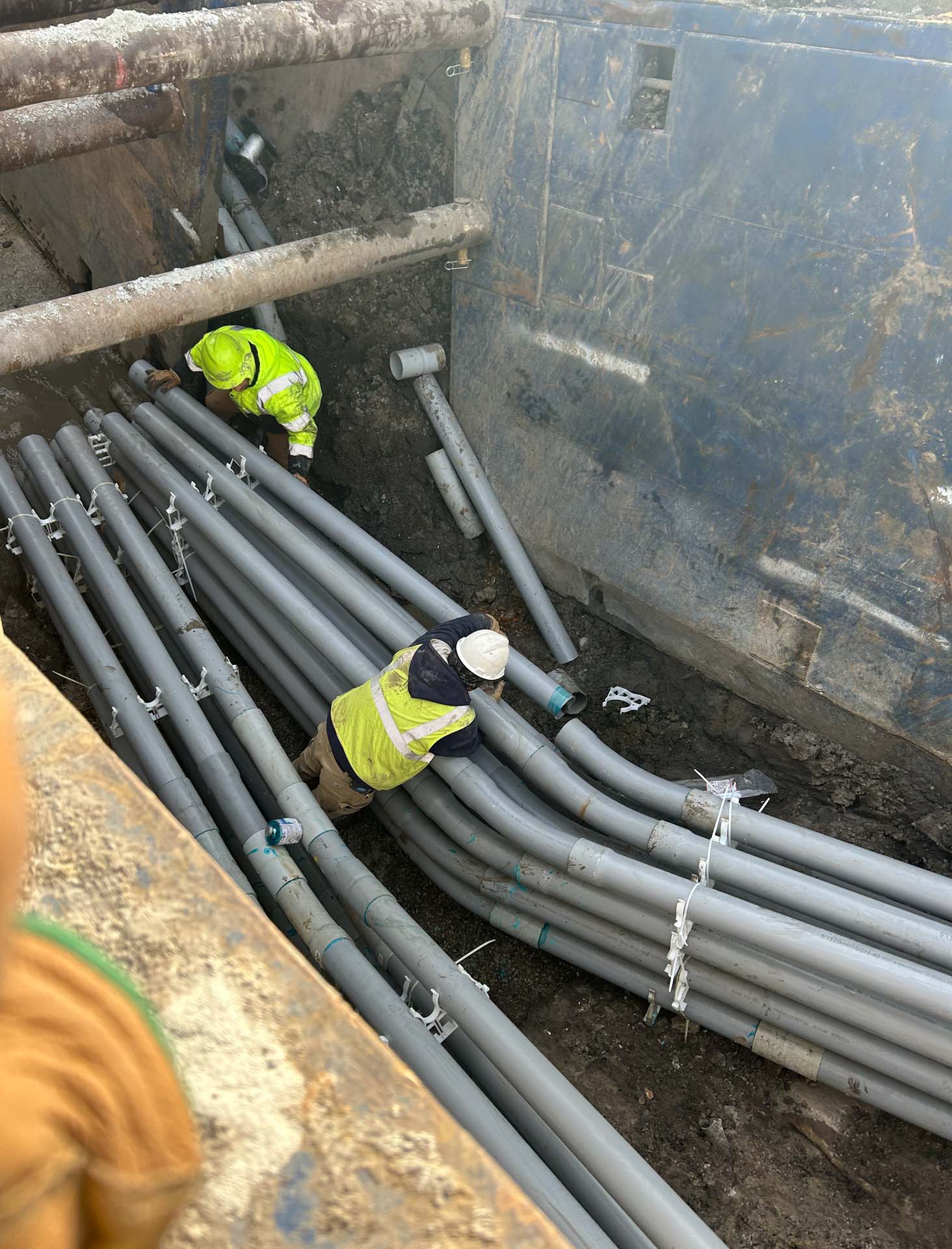
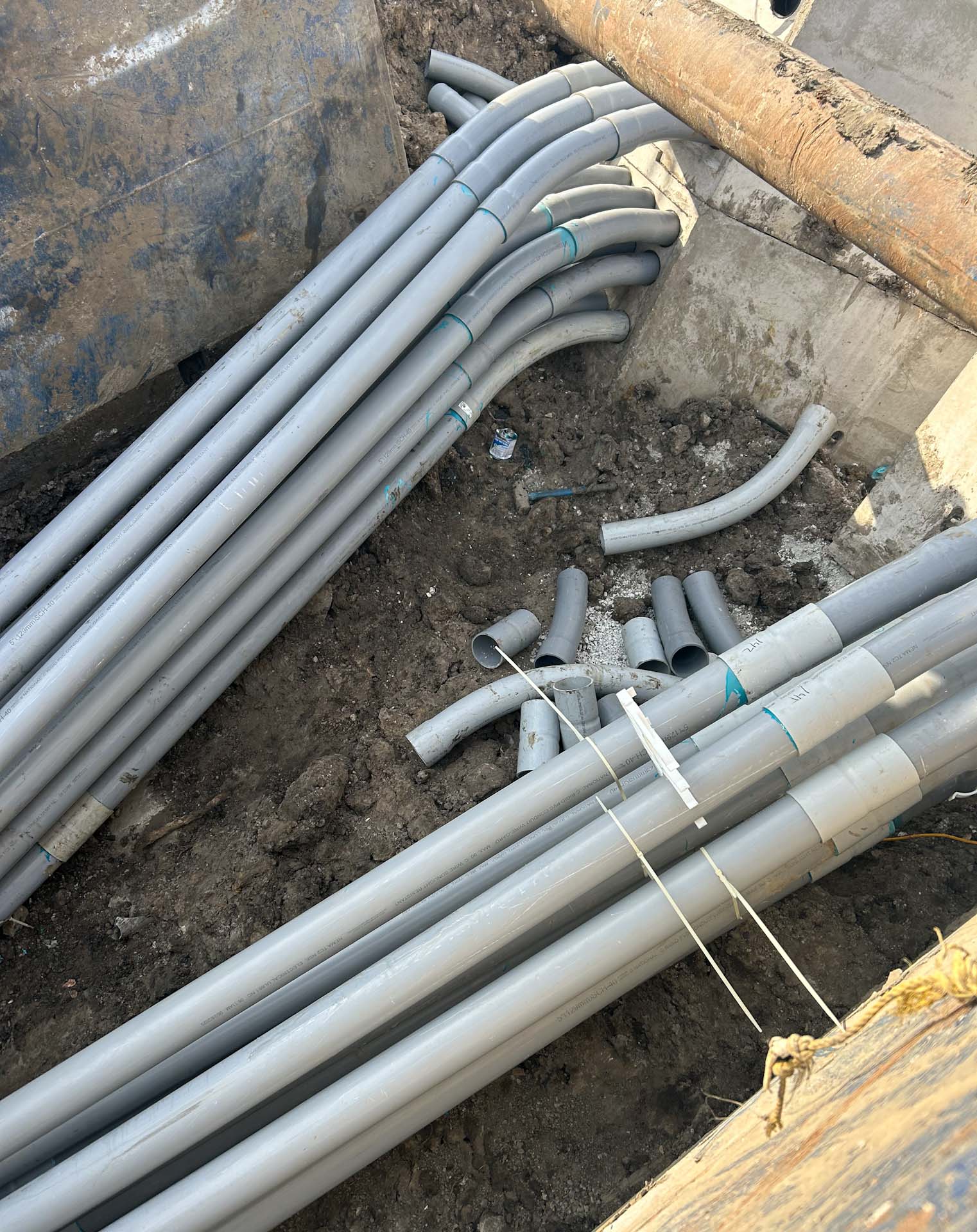
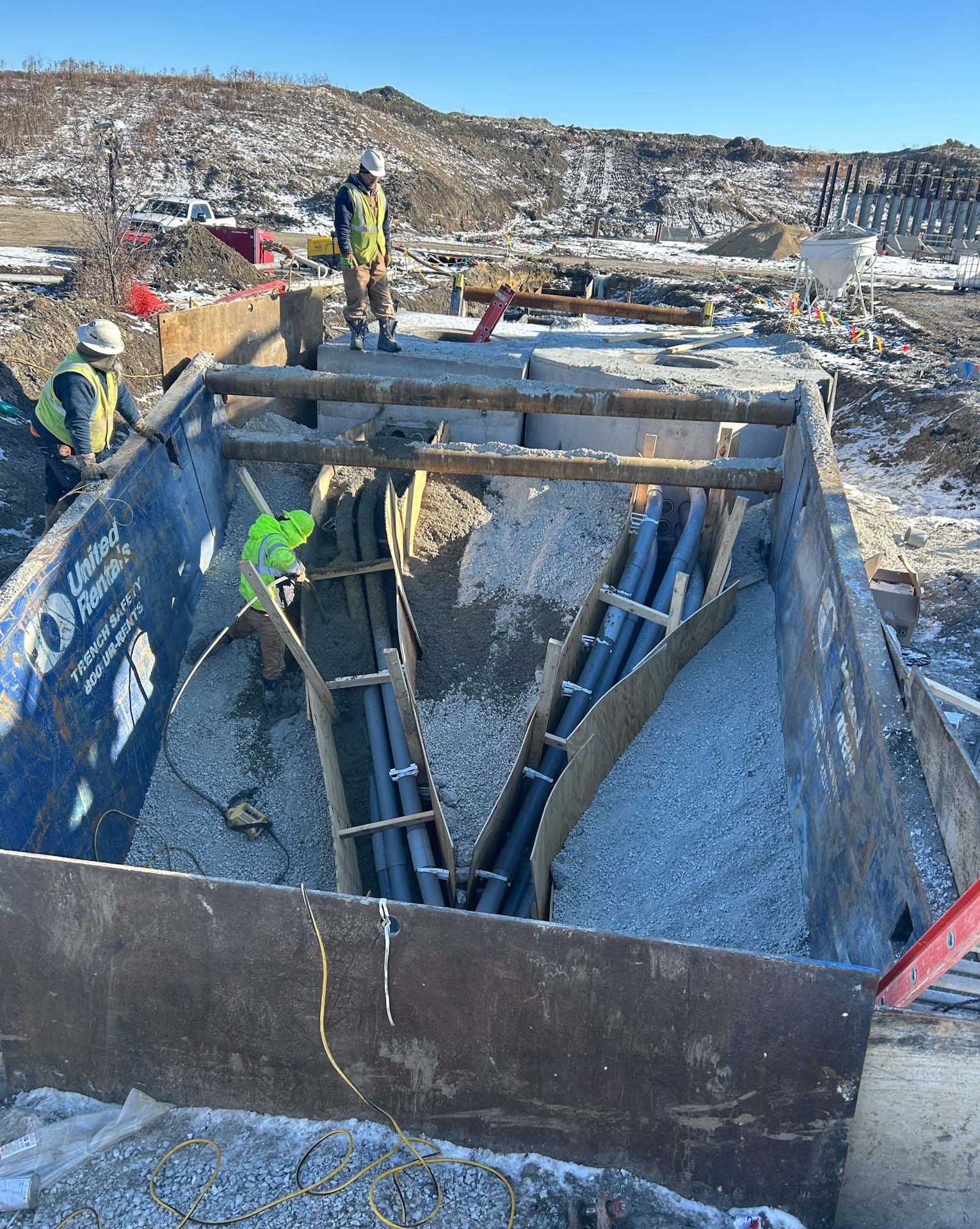
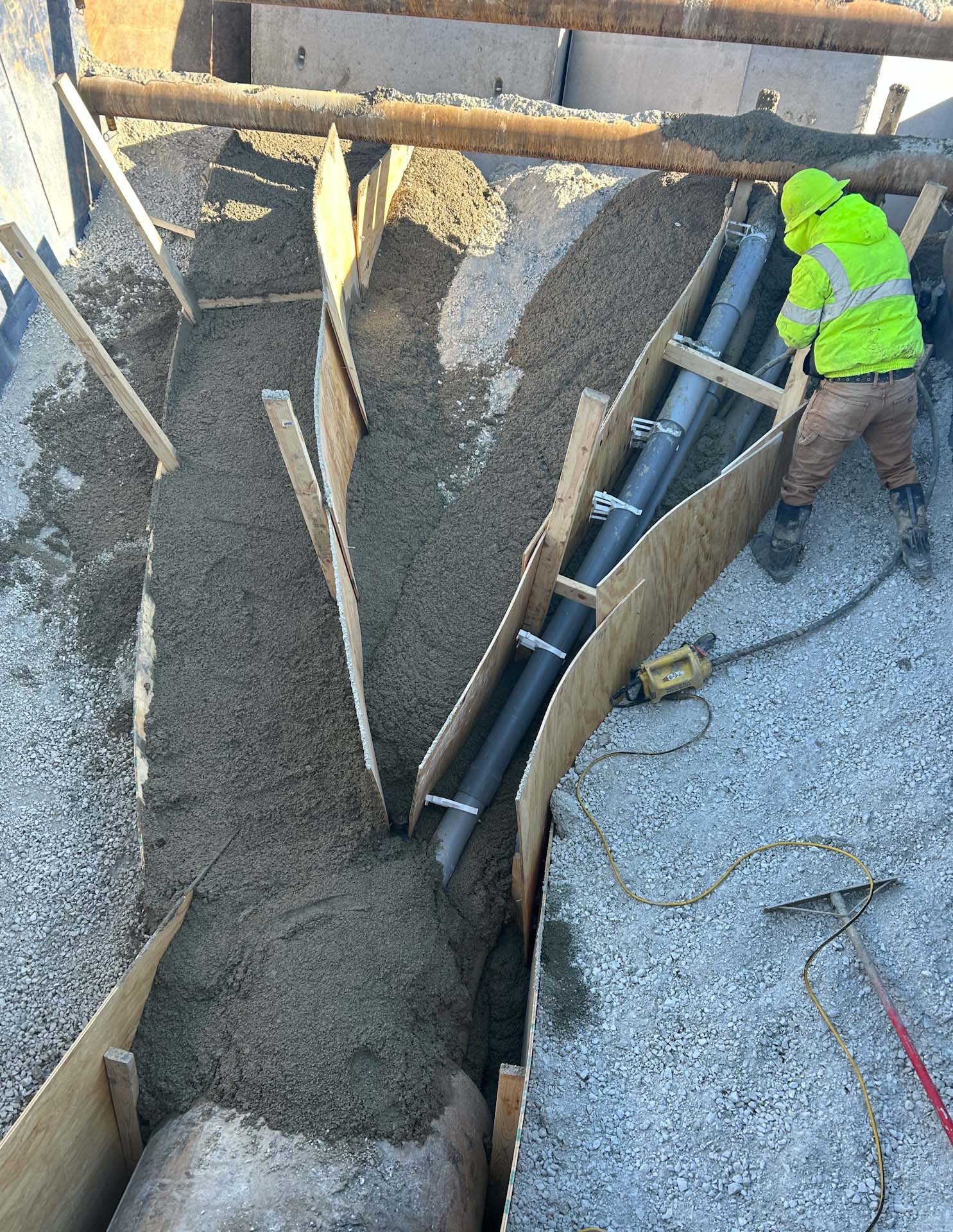
- Duct Package: The new duct package consisted of 12 5-inch ducts carefully routed and secured using spacers to maintain separation and structural integrity.
Technical Challenges & Solutions:
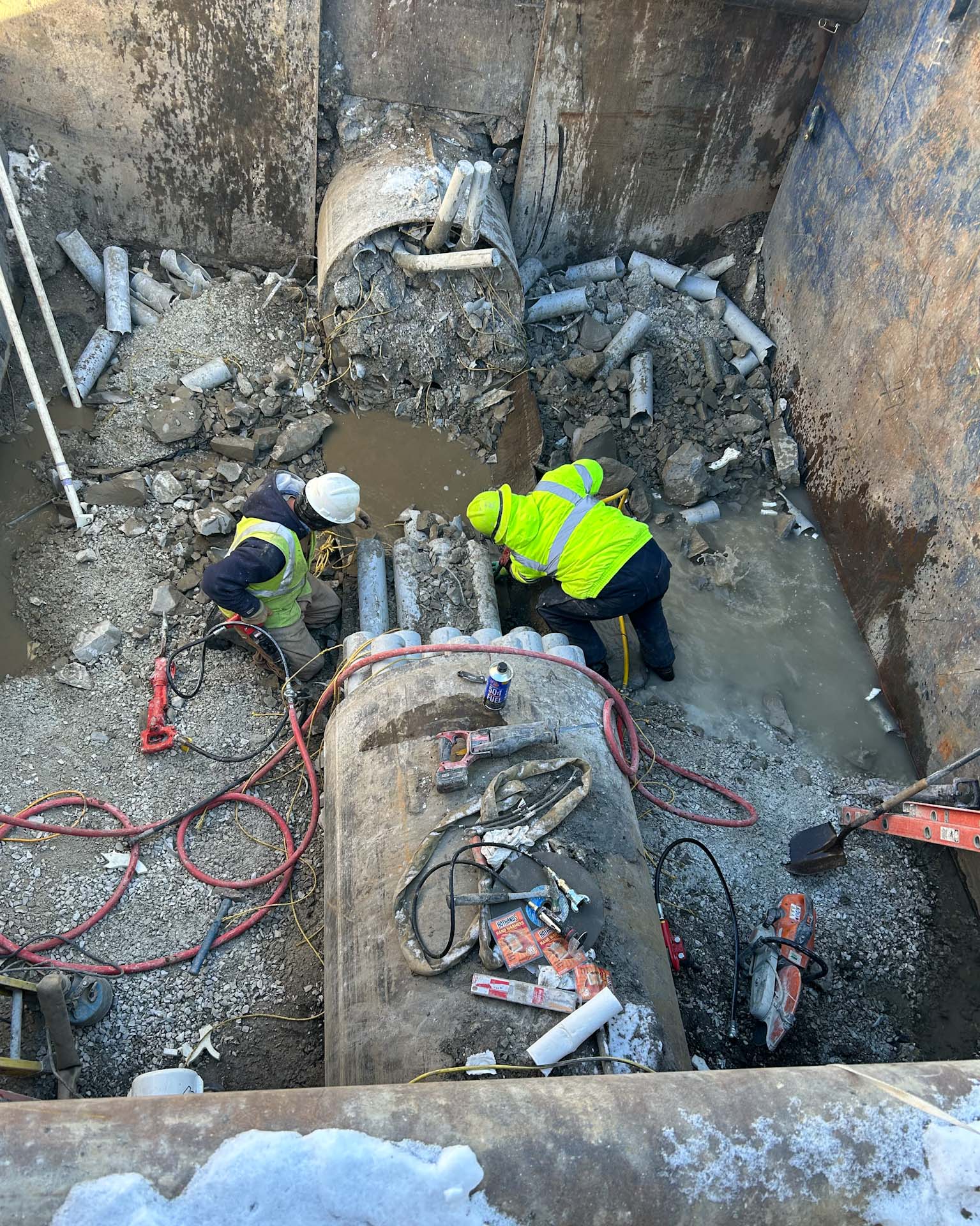
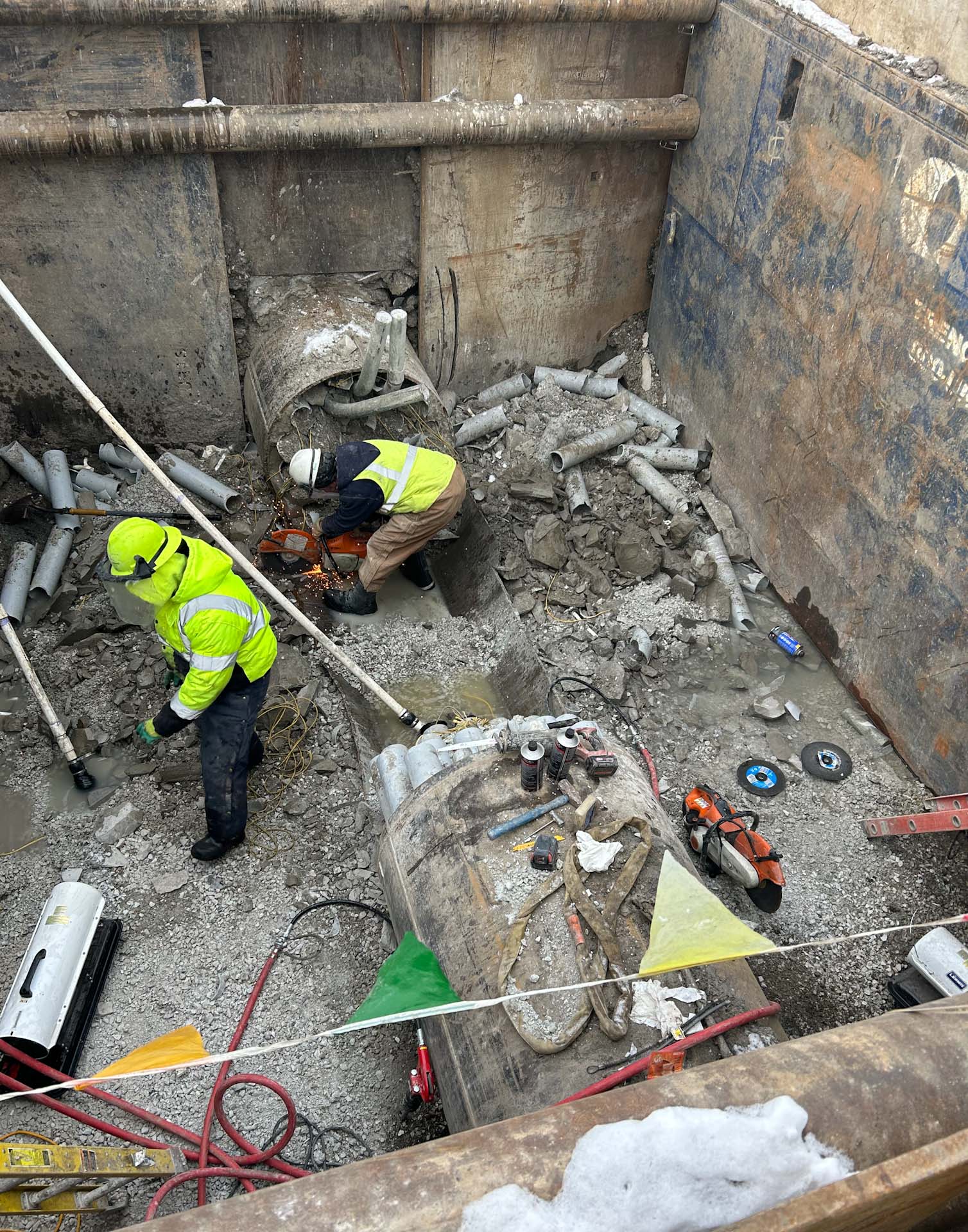
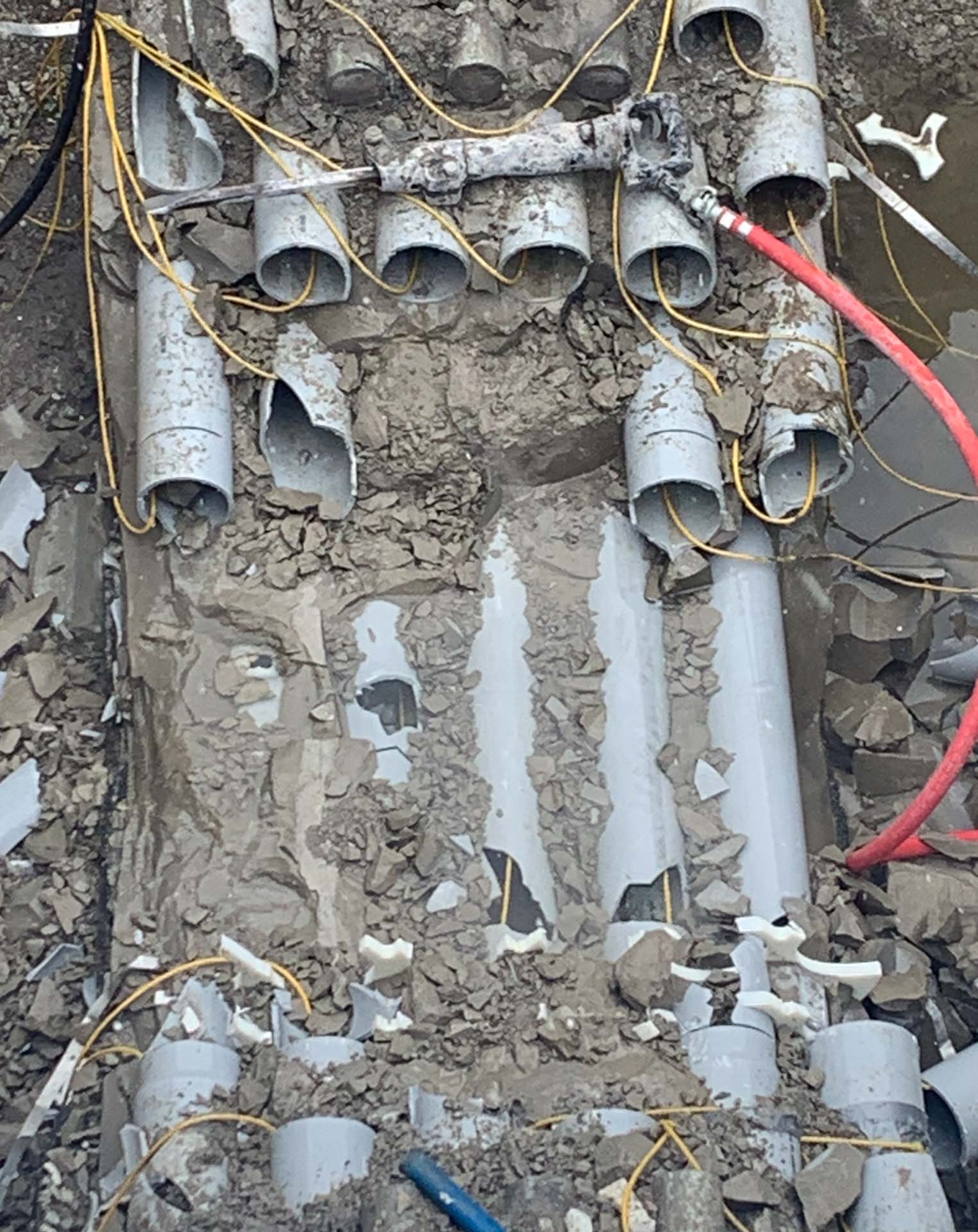
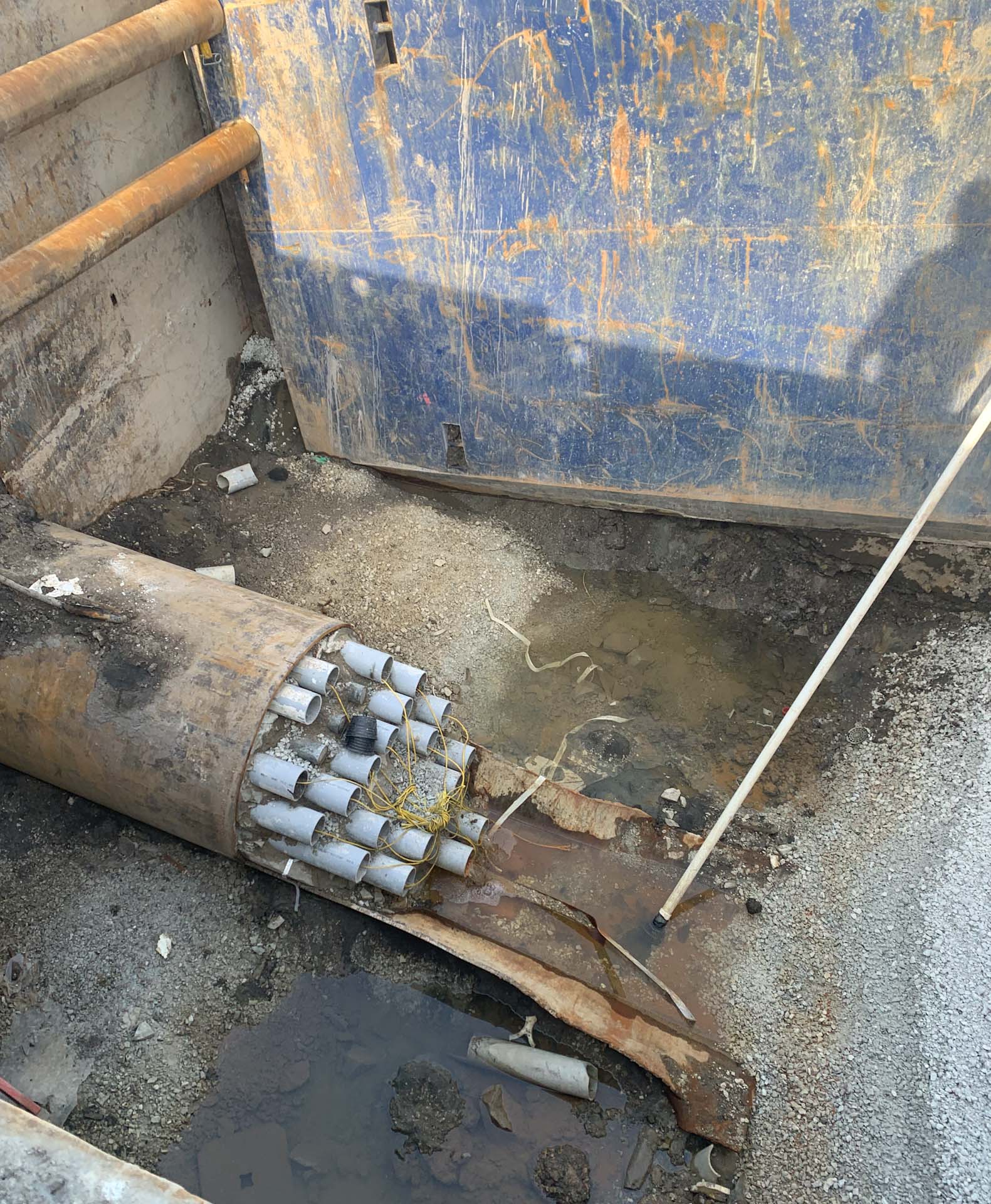
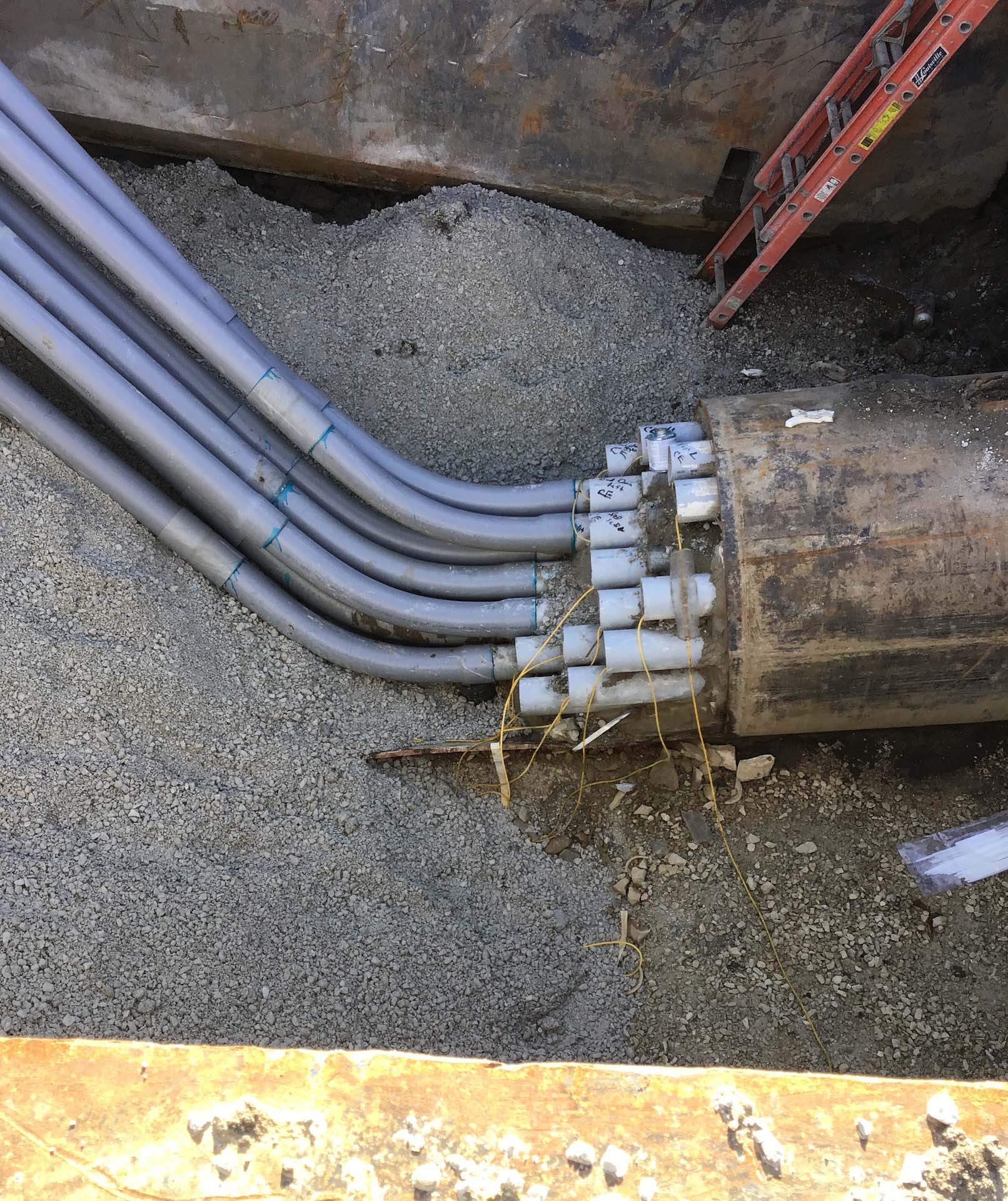
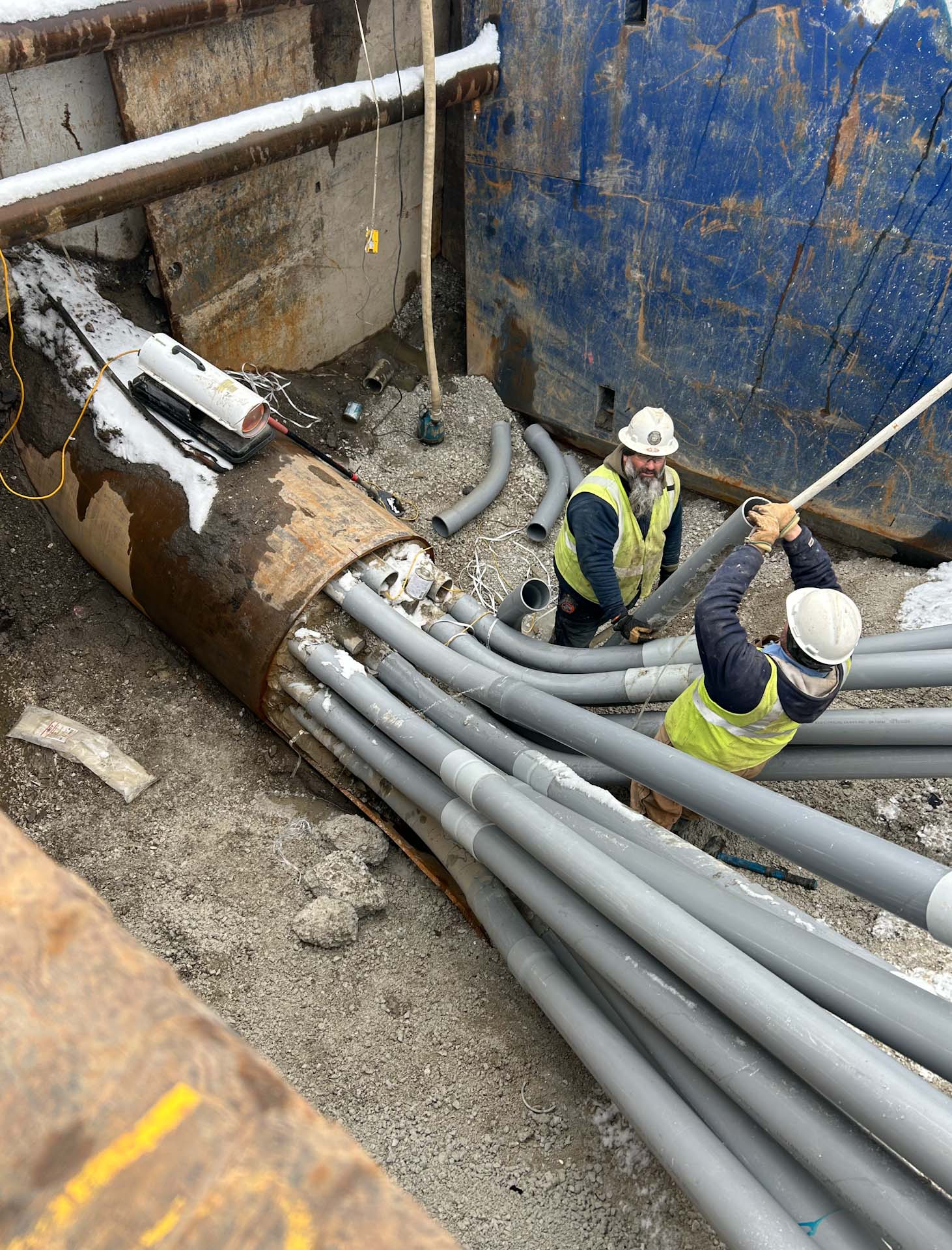
- Tie-In Procedure: The new system required a critical tie-into two existing duct banks enclosed in 36” and 48” steel casings. This complex operation necessitated cutting open the steel pipe, breaking open the existing conduits, and trimming them flush. New duct pieces were then cut, connected and routed to integrate seamlessly with the existing infrastructure and connect to the new manholes.
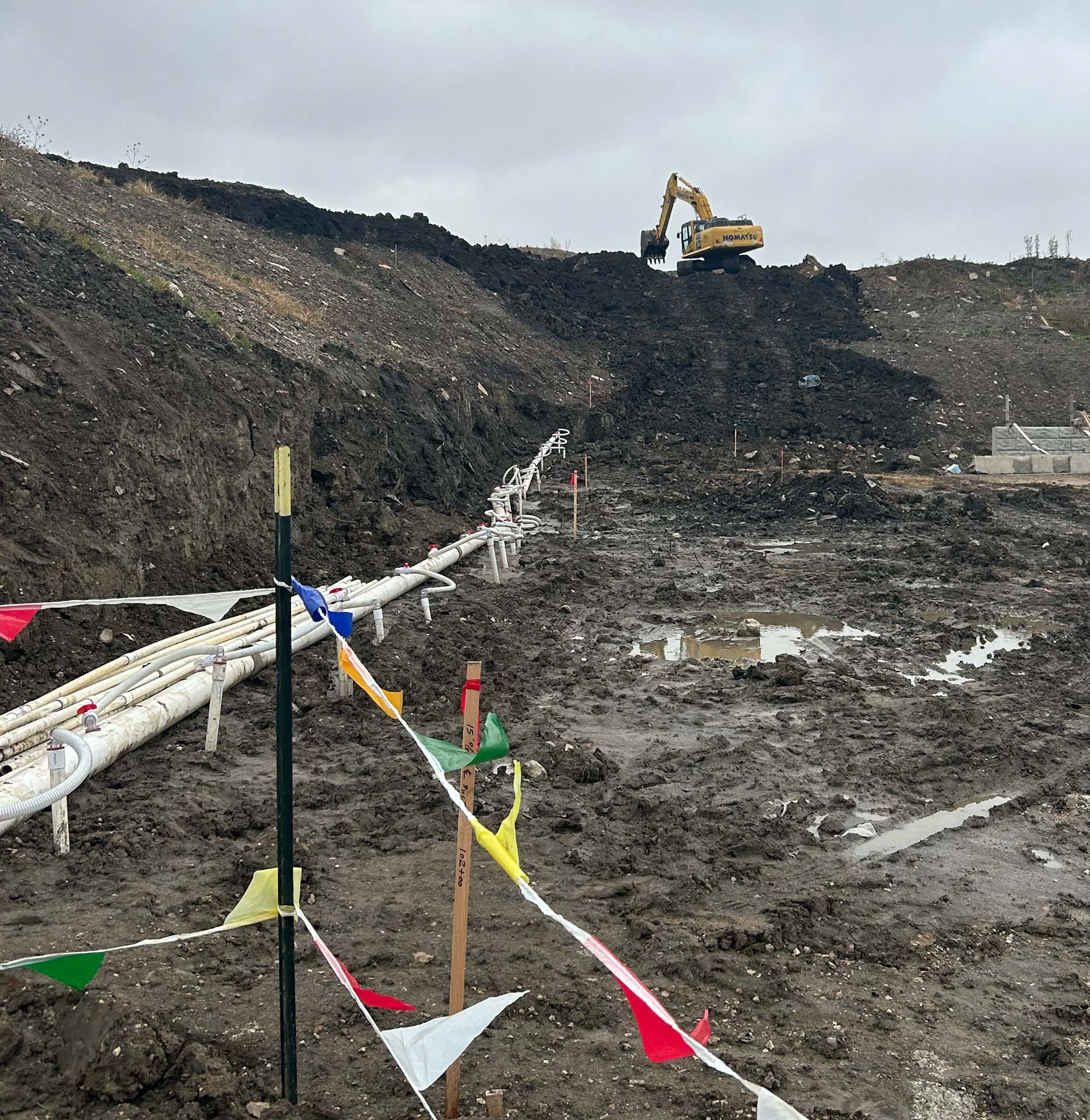
- Excavation: The entire duct run was installed using an open-cut excavation method. This work involved digging trenches up to 20 feet deep, which required strict adherence to shoring and safety protocols to ensure crew safety and trench stability. Soil conditions varied from clay to sandy loam. The sandy soils required de-watering by well points to control the water in the trench. Pumps ran around the clock to suppress the water table sufficiently for excavation to be completed.
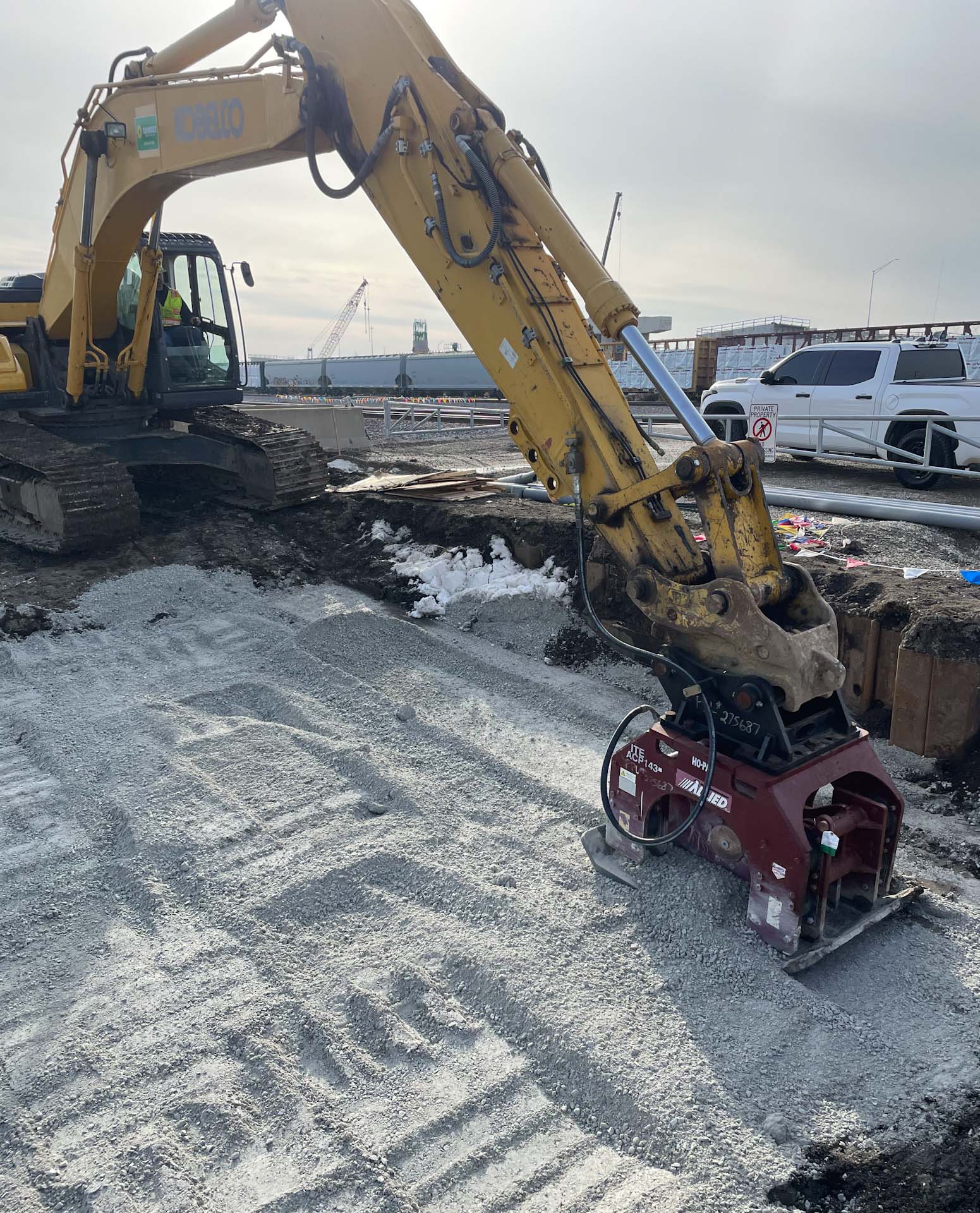
- Backfilling and Compaction: Manholes were placed on compacted gravel pads. Gravel and flowable fill were used initial backfill around the duct banks. The remainder of fill was compacted earth.
Adverse Conditions:
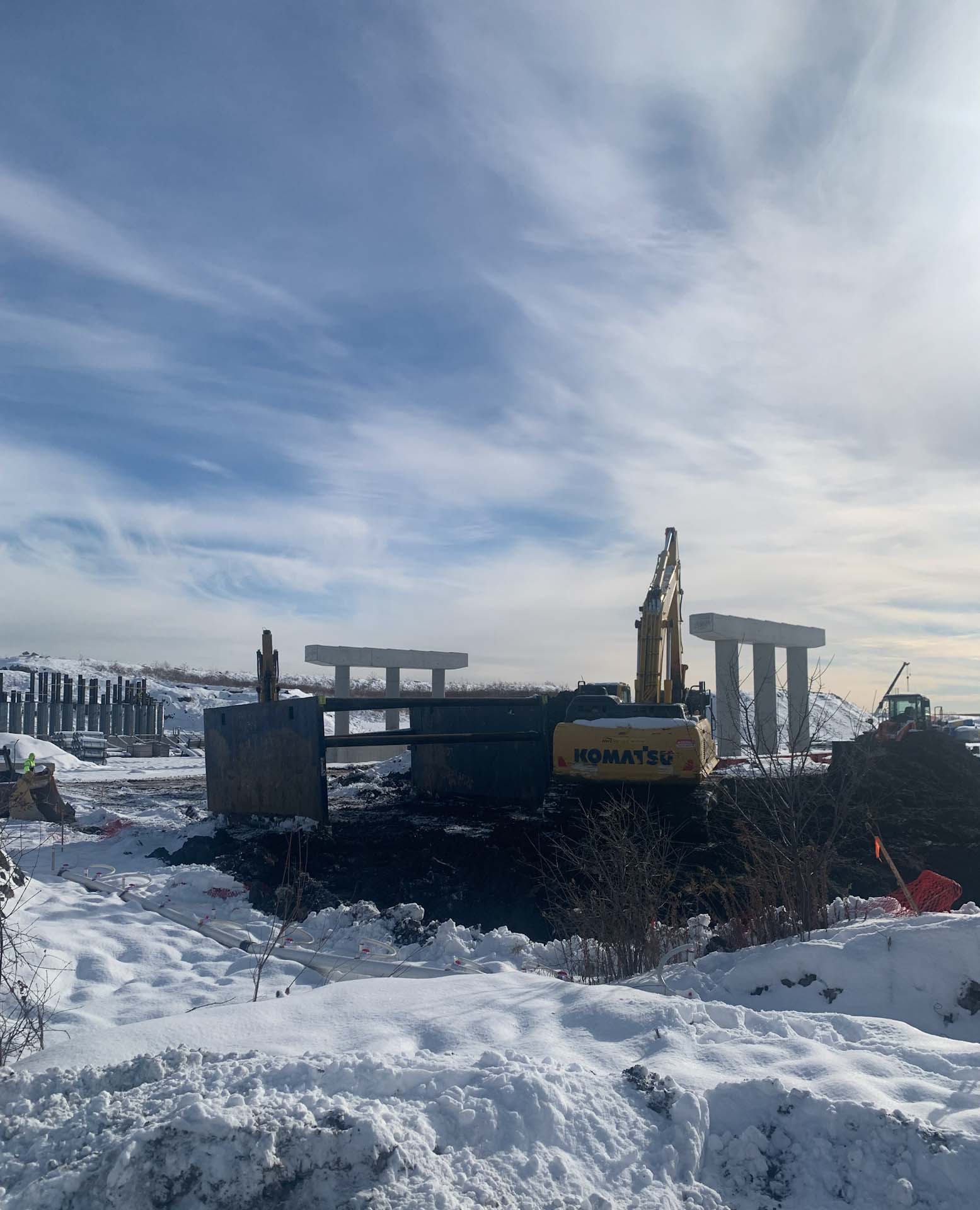
- Winter Execution: The project was executed entirely through the winter. Working in these conditions, which included frozen ground, snow, single digit temperatures, wind, and short days — required specialized equipment, cold-weather safety planning, and vigilant management to maintain the project schedule, work quality, and safety.
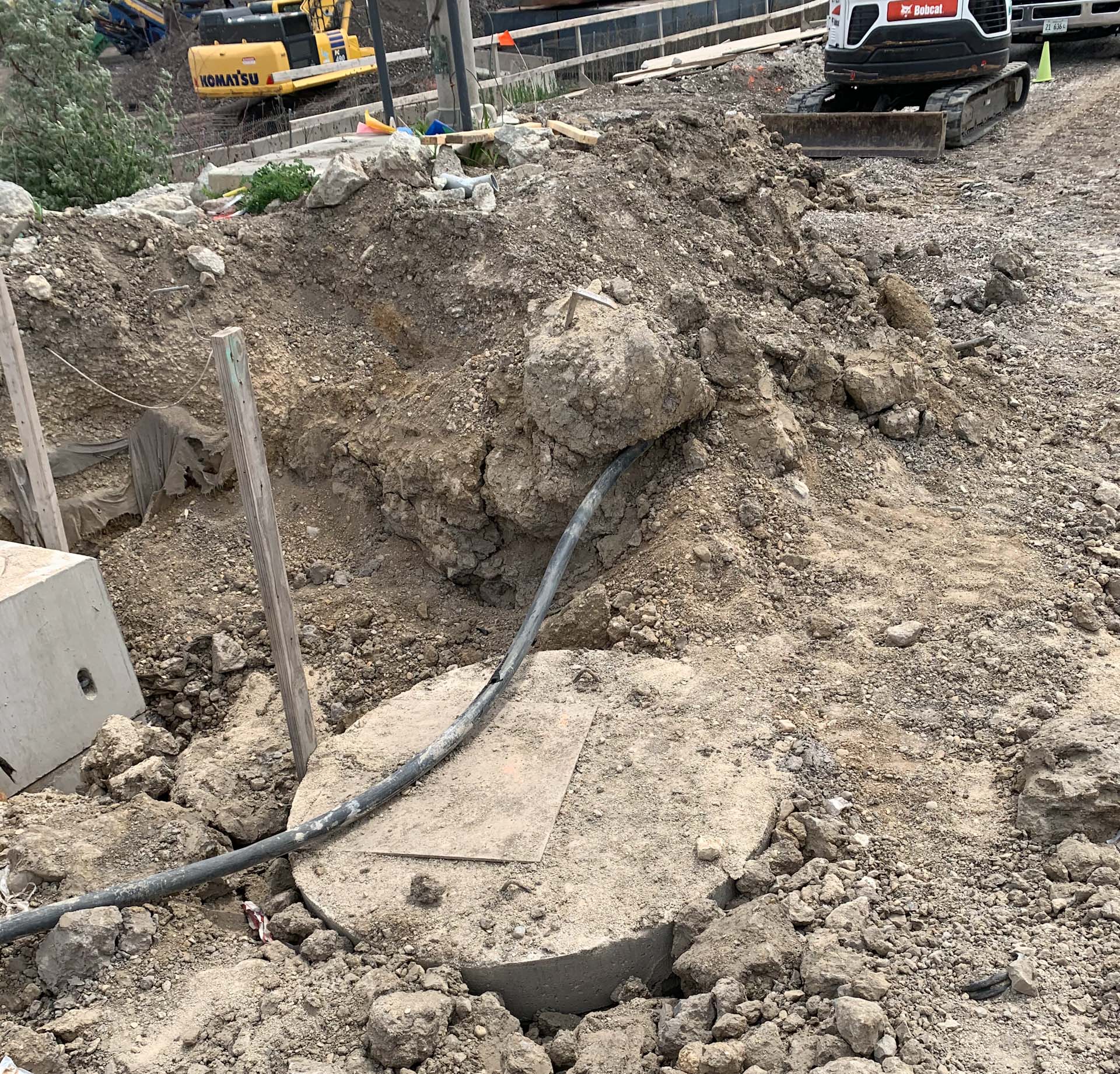
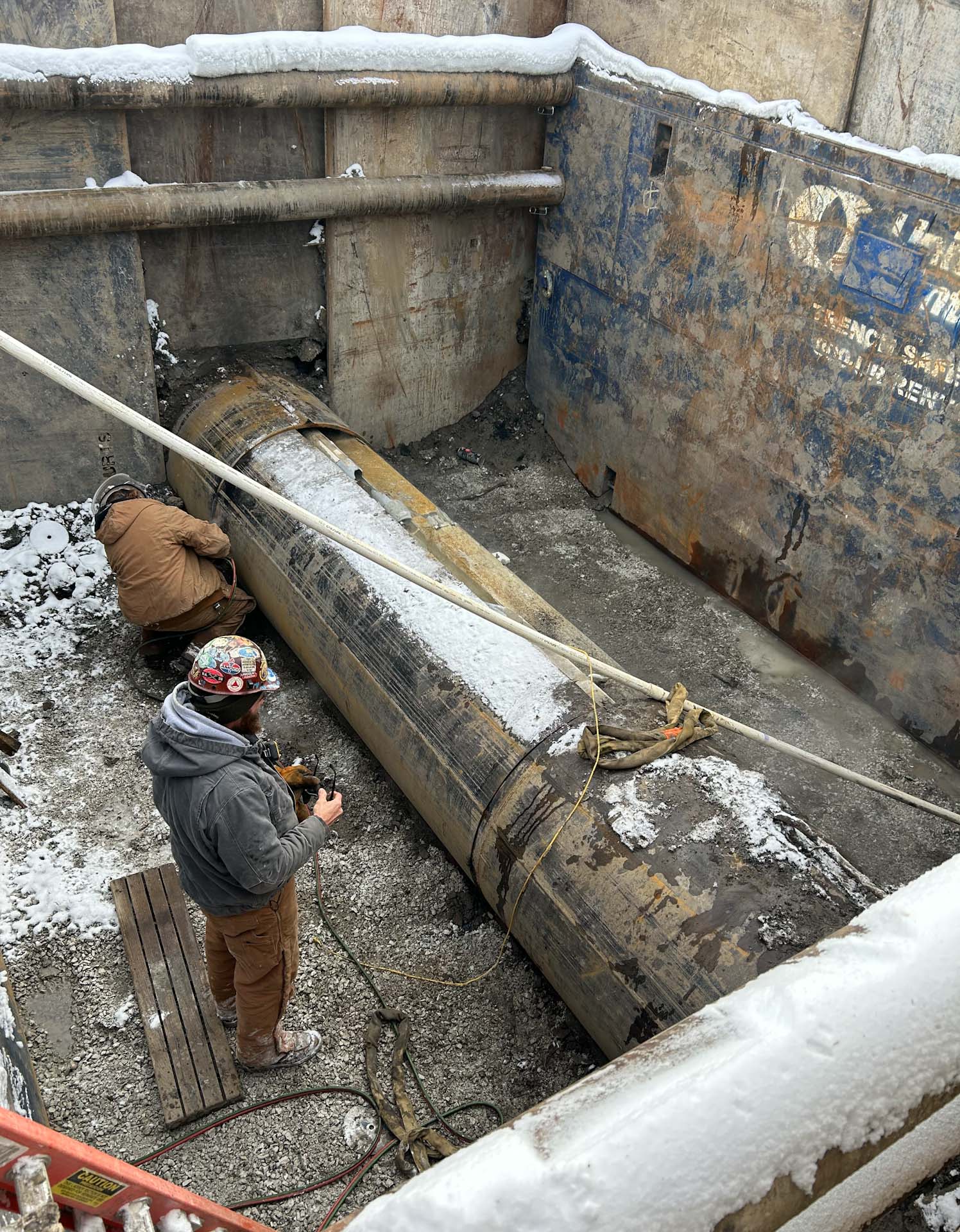
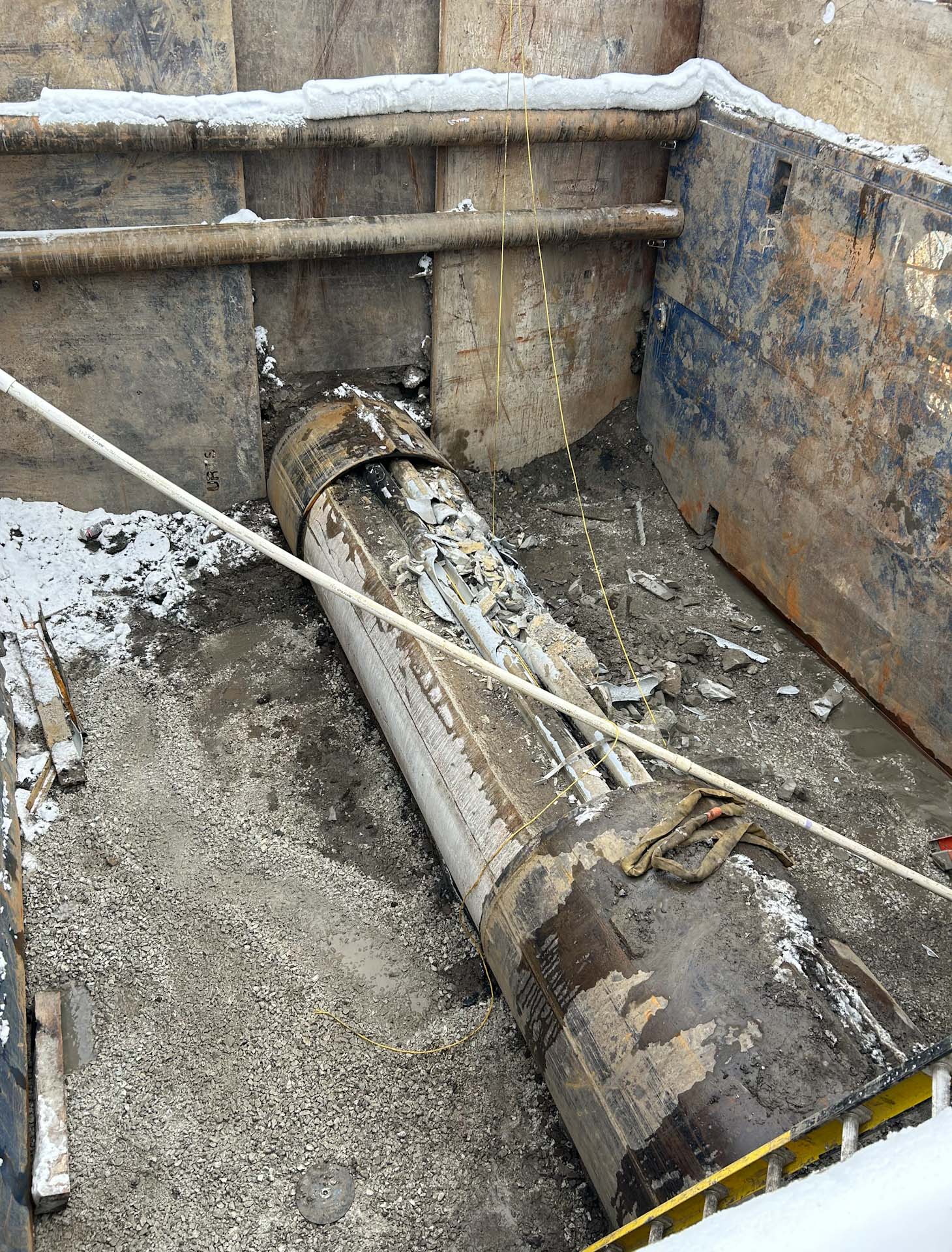
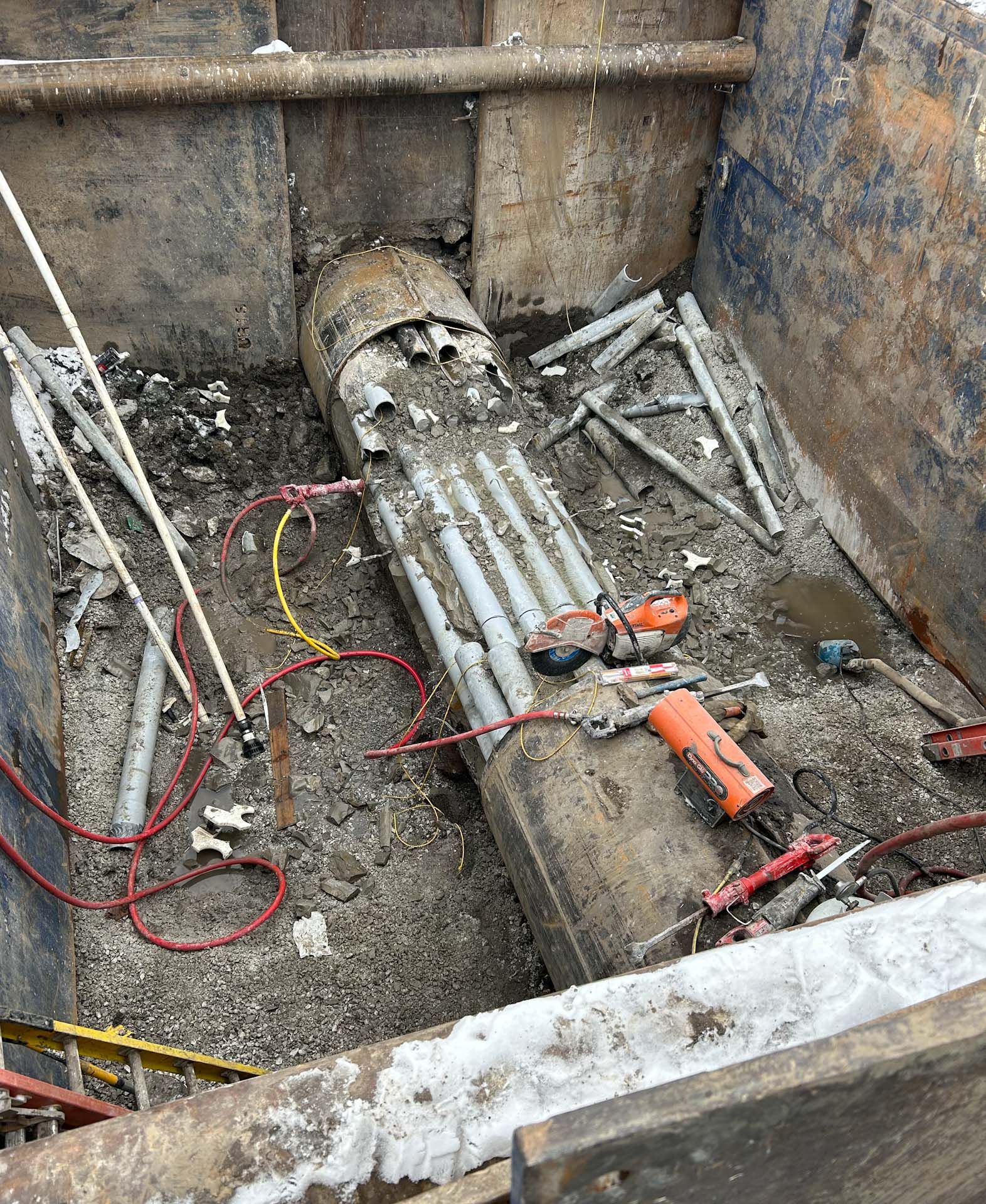
Click on any image to expand and run slide show
Results:
Despite the technical complexity of the deep trenches and the challenging tie-in to the existing steel pipe, the project was completed successfully. The next phase will involve pulling in multiple 34 Kv. conductors and terminating the cables. On a highway expansion project numerous tasks are being completed simultaneously. Any delay on the part of ECC will not prevent other tasks from being completed. It would simply make our project more costly to complete. The on-time execution through the winter months demonstrated ECC’s ability to manage high-risk logistics and maintain construction quality under the most difficult conditions, delivering a robust and reliable underground utility system for the client.
If you have a challenging underground utility project and require a contractor who will manage all aspects and complete it on time, click on “Request a Project” or call Carl Oko at 630-360-7903.