
Monopoles add to grid reliability by adding permanent anchor points with reduced maintenance
Transitioning to Direct Burial Steel Monopoles in High-Voltage Distribution
Executive Summary
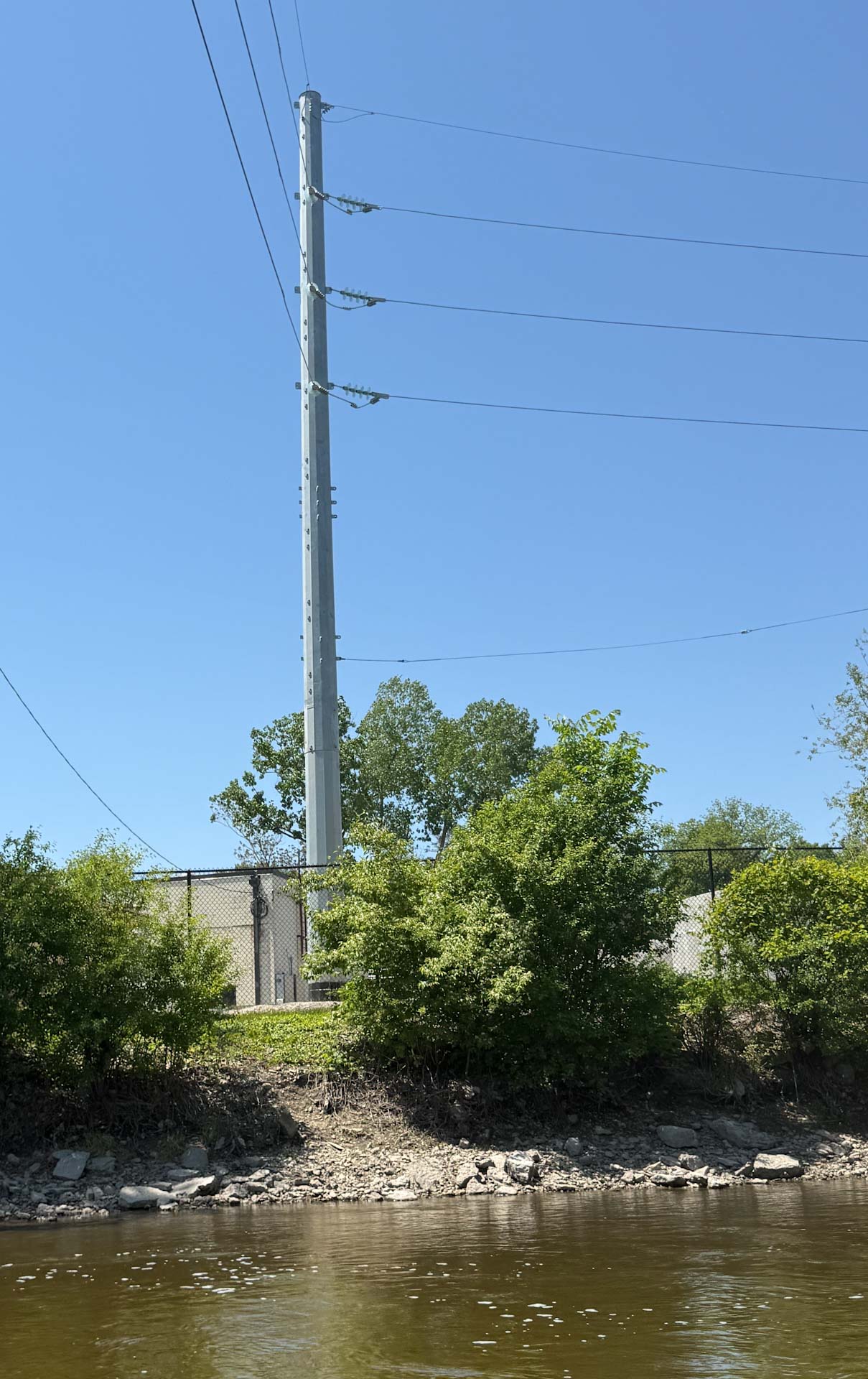
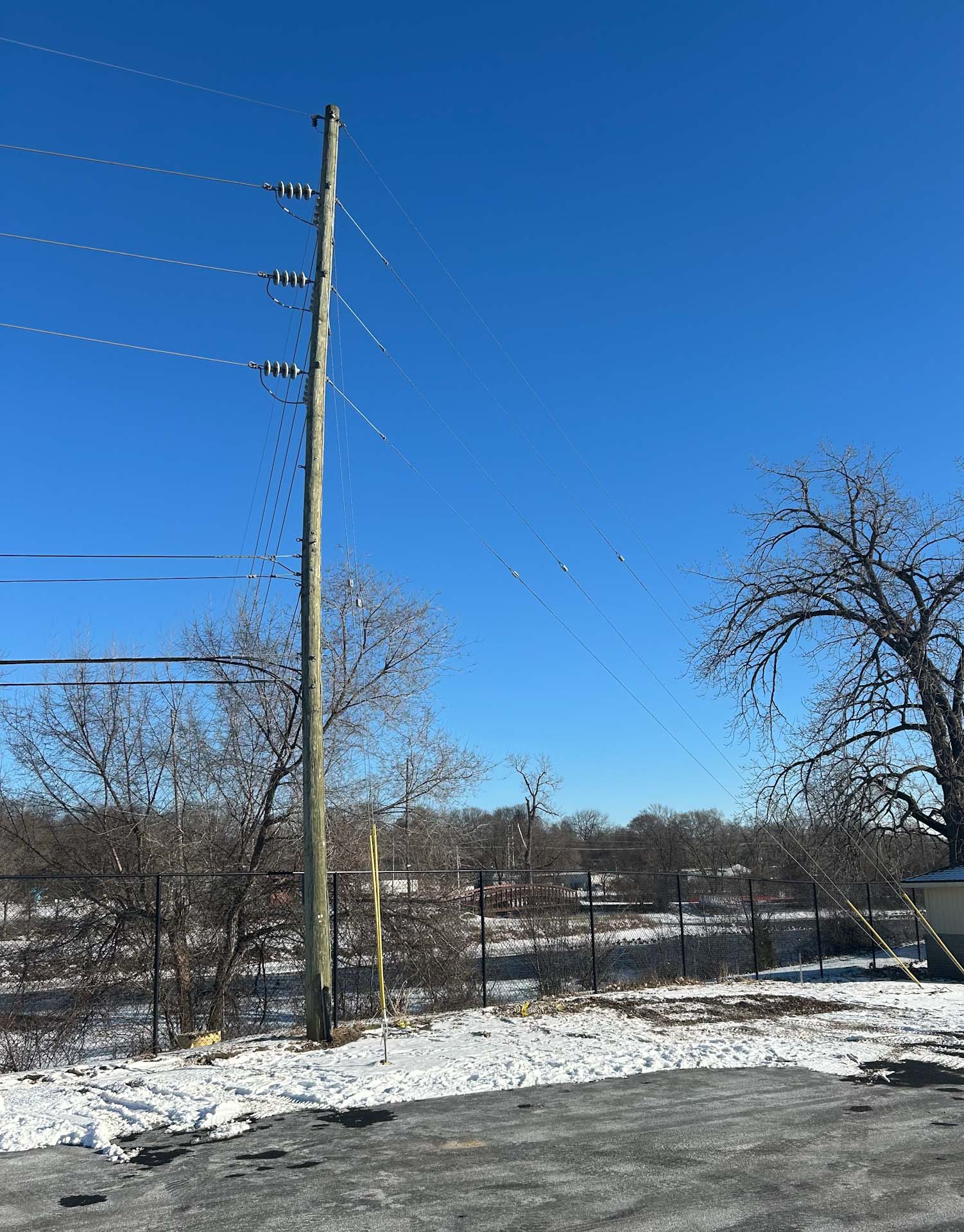
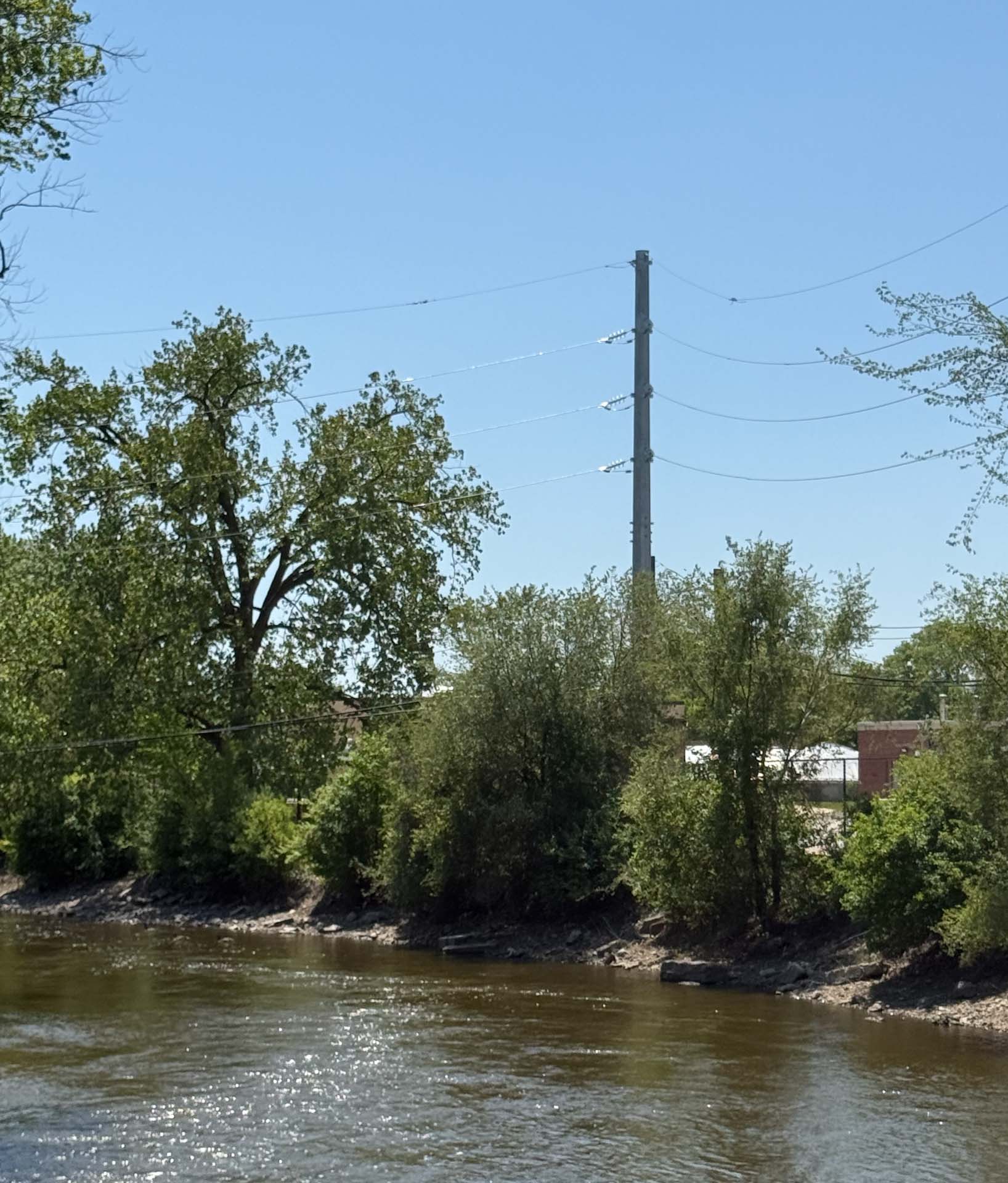
Electric Conduit Construction (ECC) recently executed a critical infrastructure upgrade on a 34 kV distribution line. The project involved replacing a traditional wooden guyed pole with an 80-foot direct burial steel monopole. This transition addresses the inherent structural limitations of timber in directional-change applications, providing a robust, guy-wire-free solution for modern grid reliability.
The Challenge: Wood’s Flexibility vs. Directional Stress
While wooden poles are cost-effective and naturally resilient, they function as "nature’s composite," offering high flexibility. This flexibility becomes a liability at corner poles—points where the power lines change direction.
- The Problem: The tension and weight of the conductors at a corner create a lateral force that causes wooden poles to bend or lean.
- Traditional Solution: Guy wires are typically anchored to the ground to counteract this force.
- The Constraint: Guy wires require a larger footprint, pose a maintenance burden, and can be impractical in congested or high-traffic areas.
The Solution: The Engineered Steel Monopole
To eliminate the need for guy wires while maintaining structural integrity, ECC opted for a direct burial steel monopole. Unlike timber, these are precision-engineered structures:
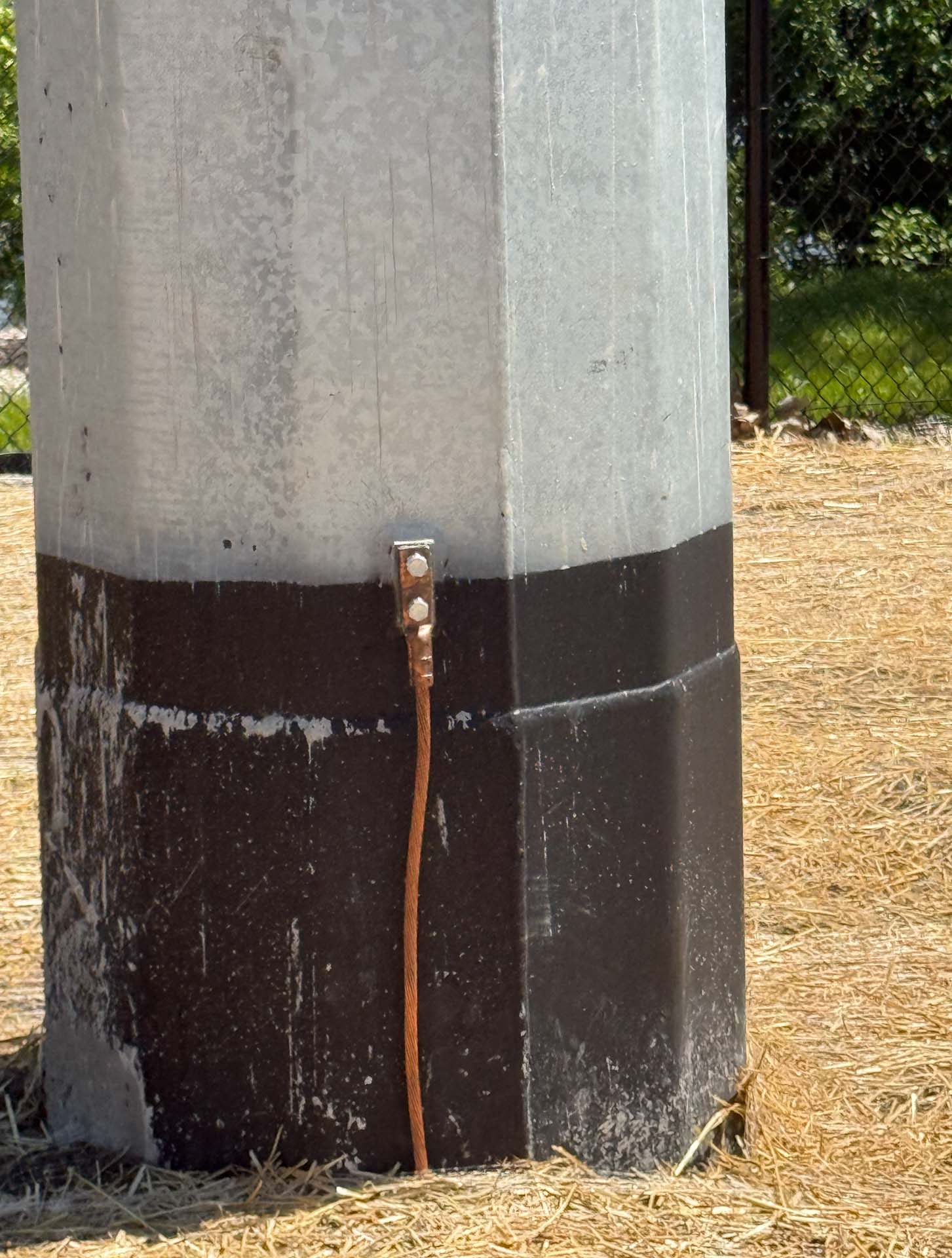
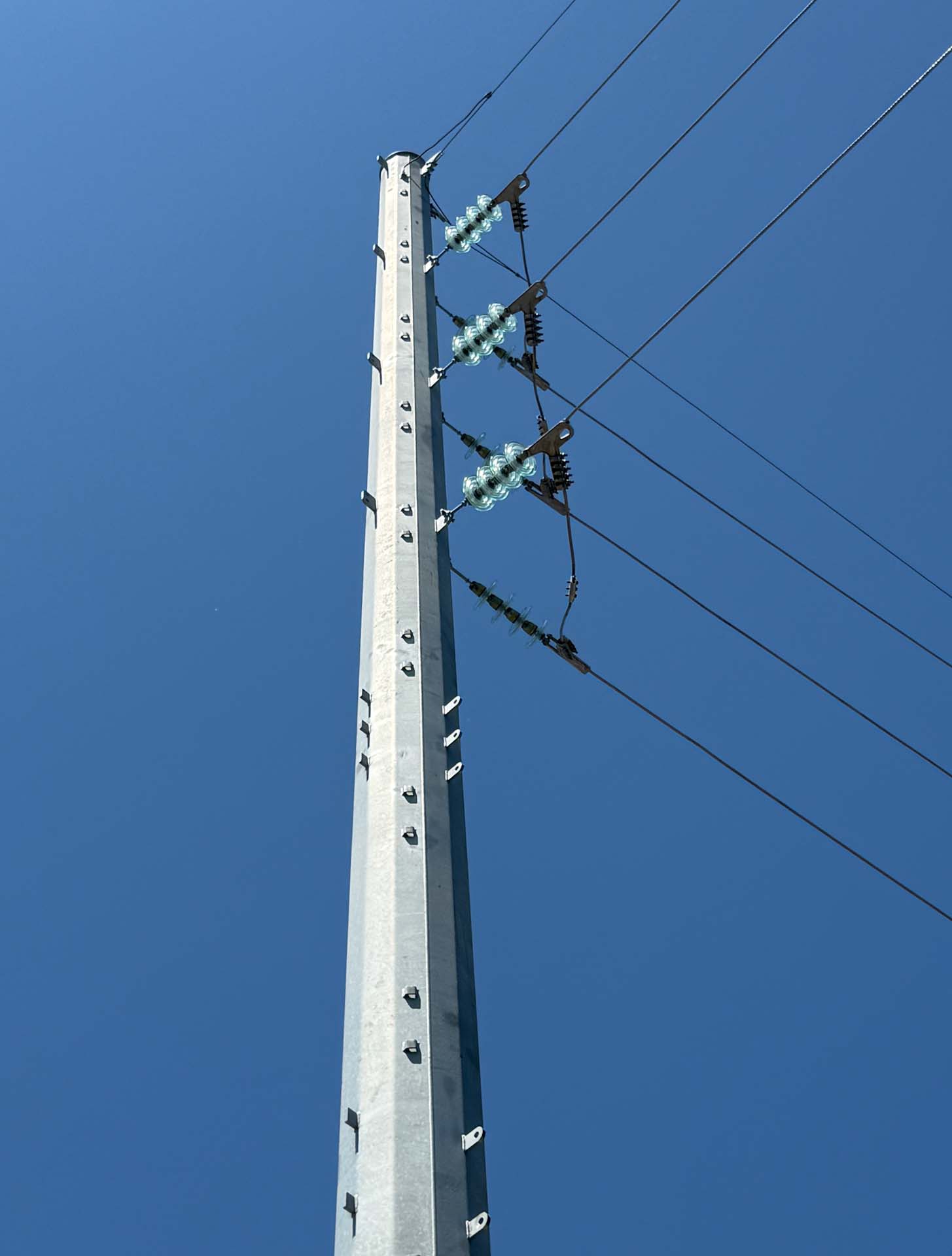
- Material: Galvanized steel for corrosion resistance and maximum rigidity.
- Design: Tapered sections that slip-fit over one another, allowing for modular transport and assembly.
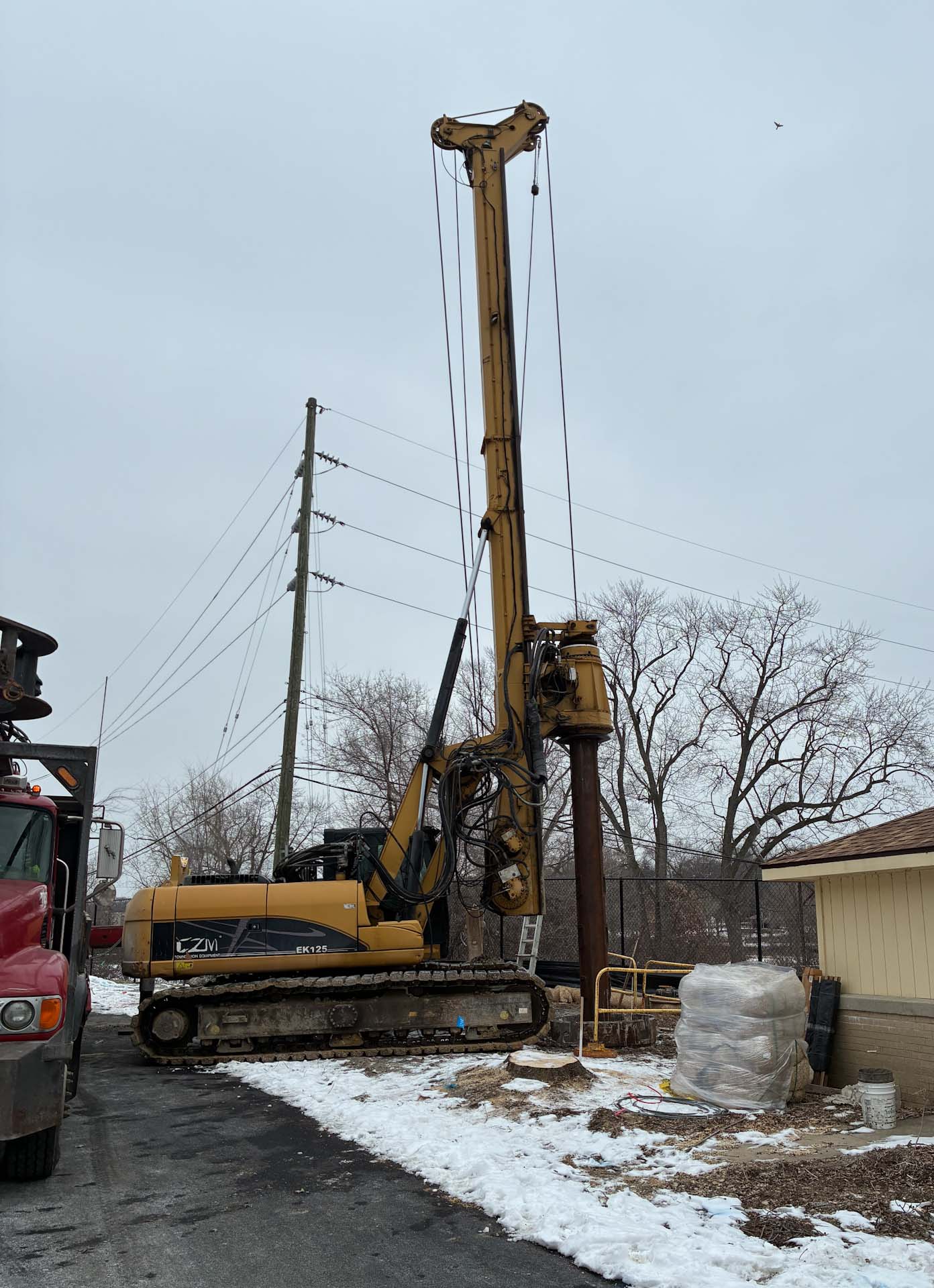
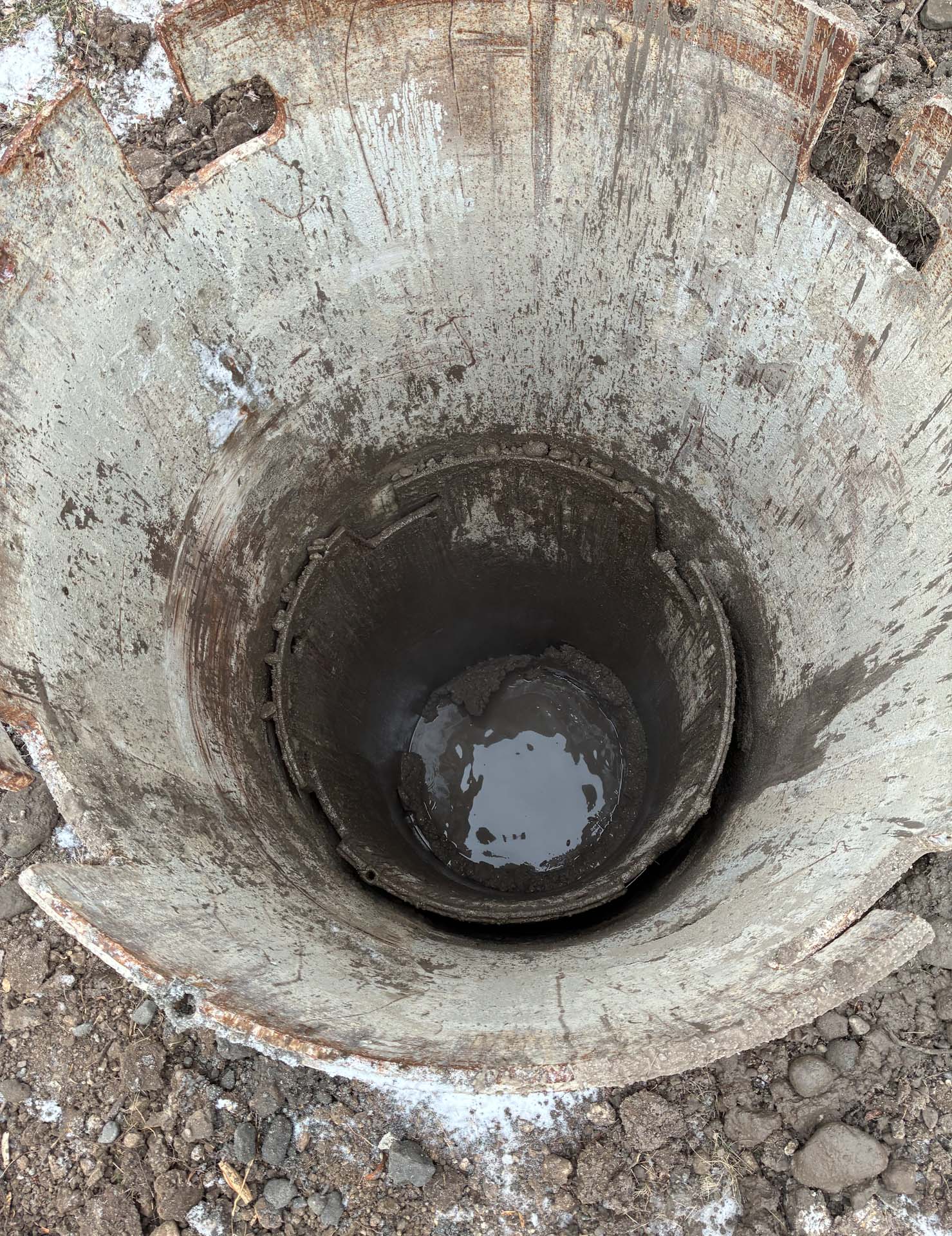
- Foundation: A deep-drilled shaft backfilled with concrete, creating a rigid "fixed-end" beam capable of resisting high moment loads without external bracing.
Project Execution: Step-by-Step
The replacement was carried out with a focus on safety, geotechnical precision, and structural verification.
- Site Preparation and Safety
A Zone of Protection was established using Lock-Out, Tag-Out (LOTO) procedures. Ensuring the 34 kV line was fully de-energized was the primary safety requirement before heavy machinery moved in.
- Subsurface Engineering
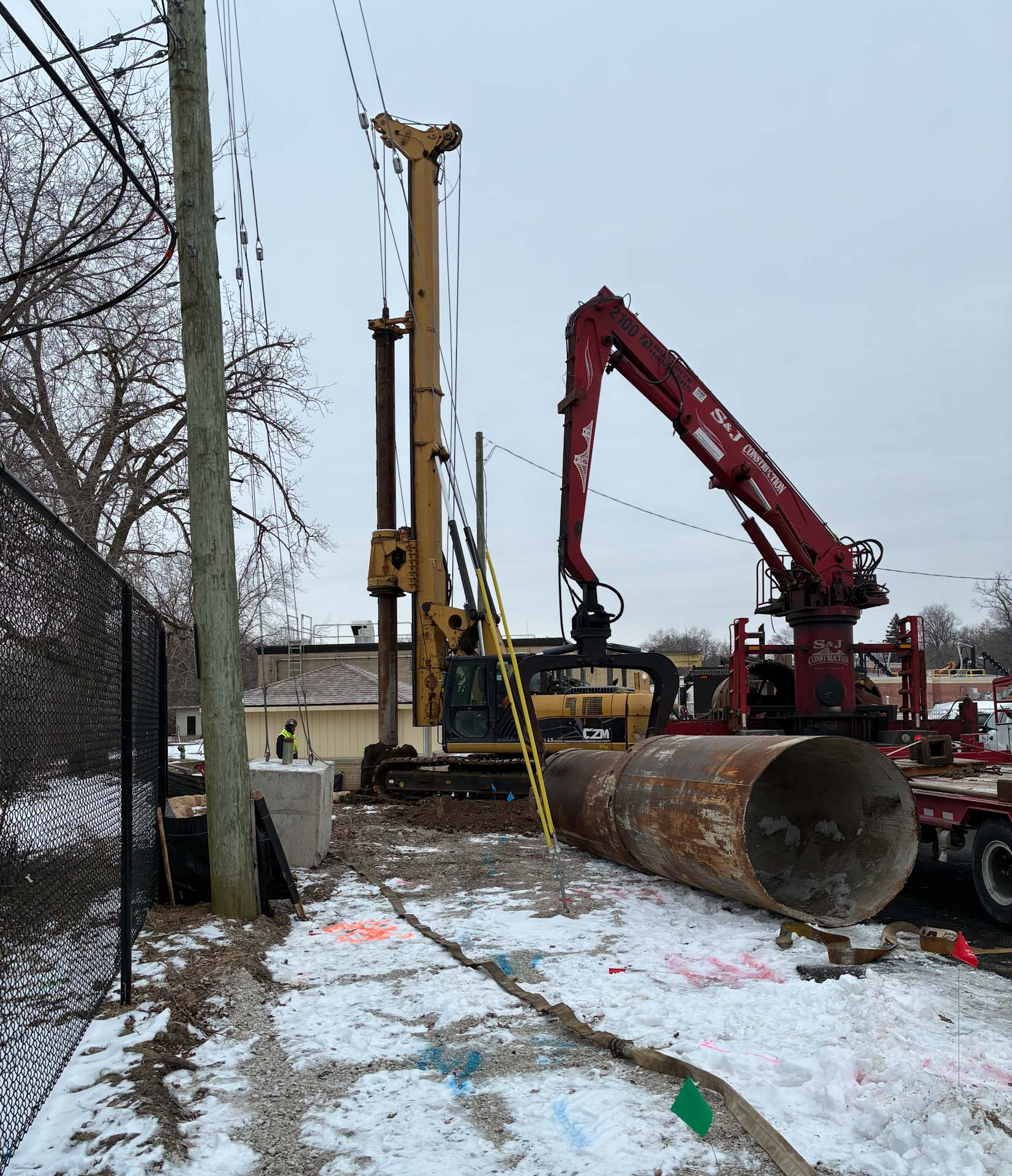
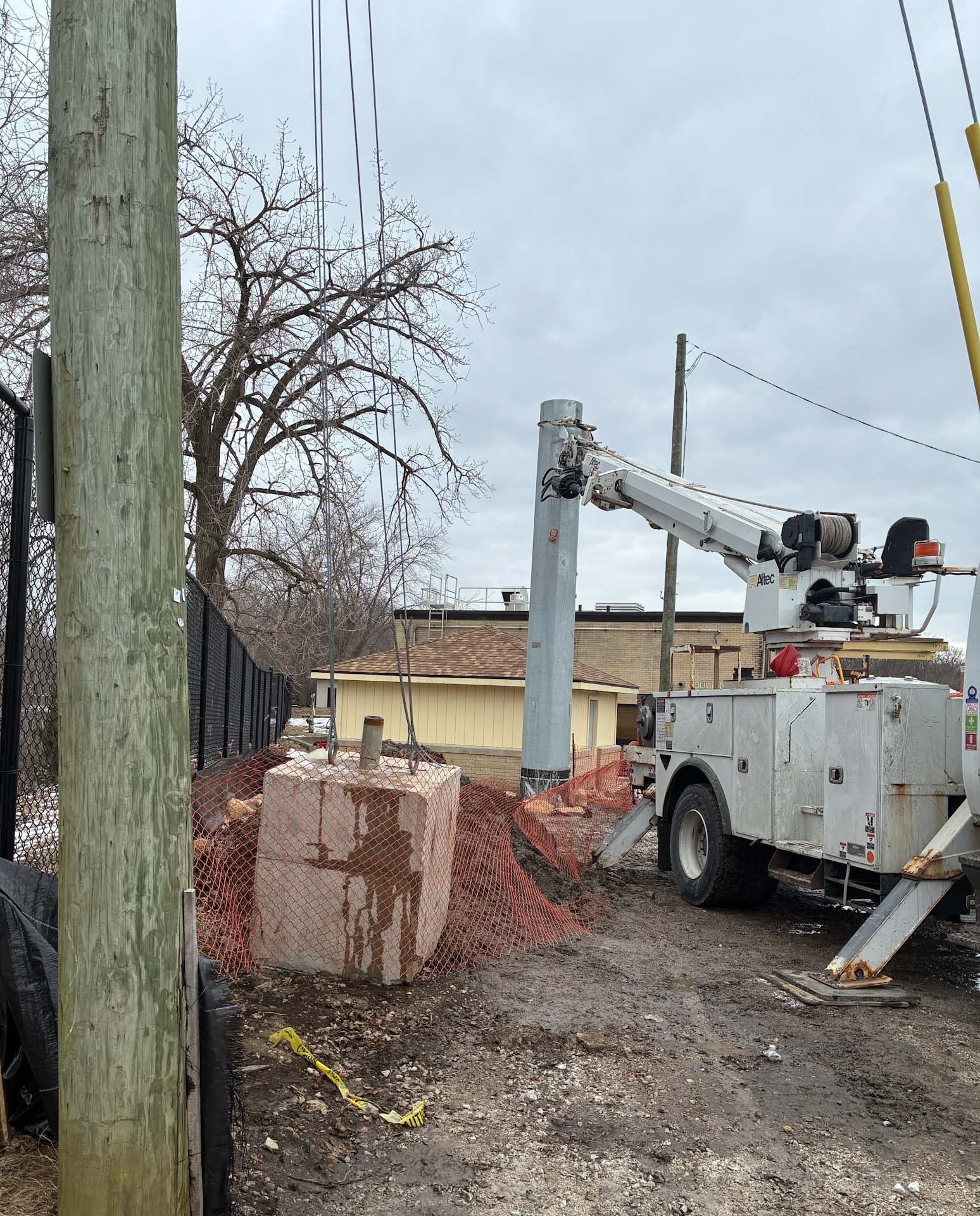
The foundation required a shaft measuring 4 feet in diameter and 22 feet in depth. This phase encountered significant geological resistance, requiring the drill to penetrate 8 feet of limestone to ensure the stability of the 80-foot structure.
- Base Installation and Testing
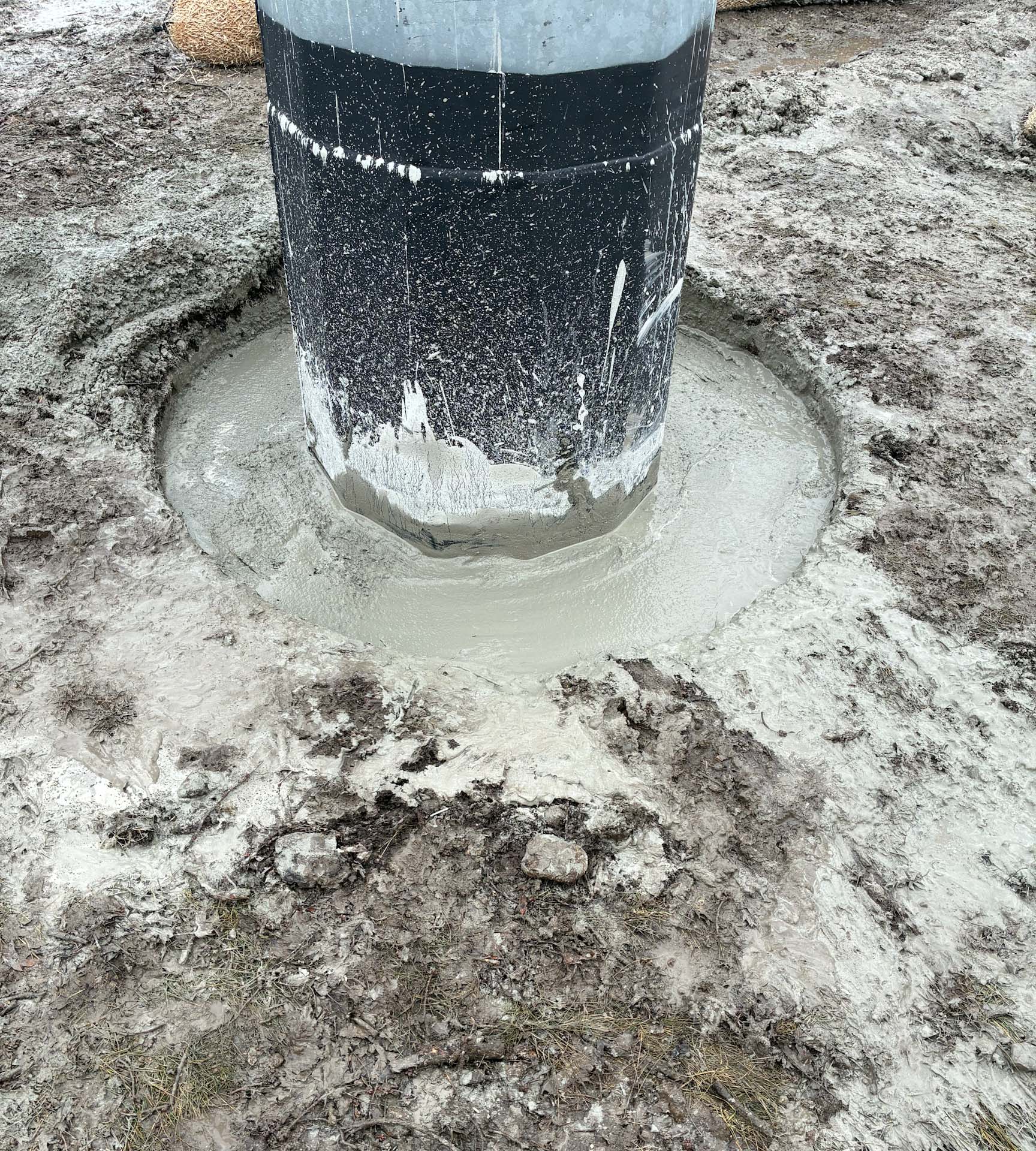
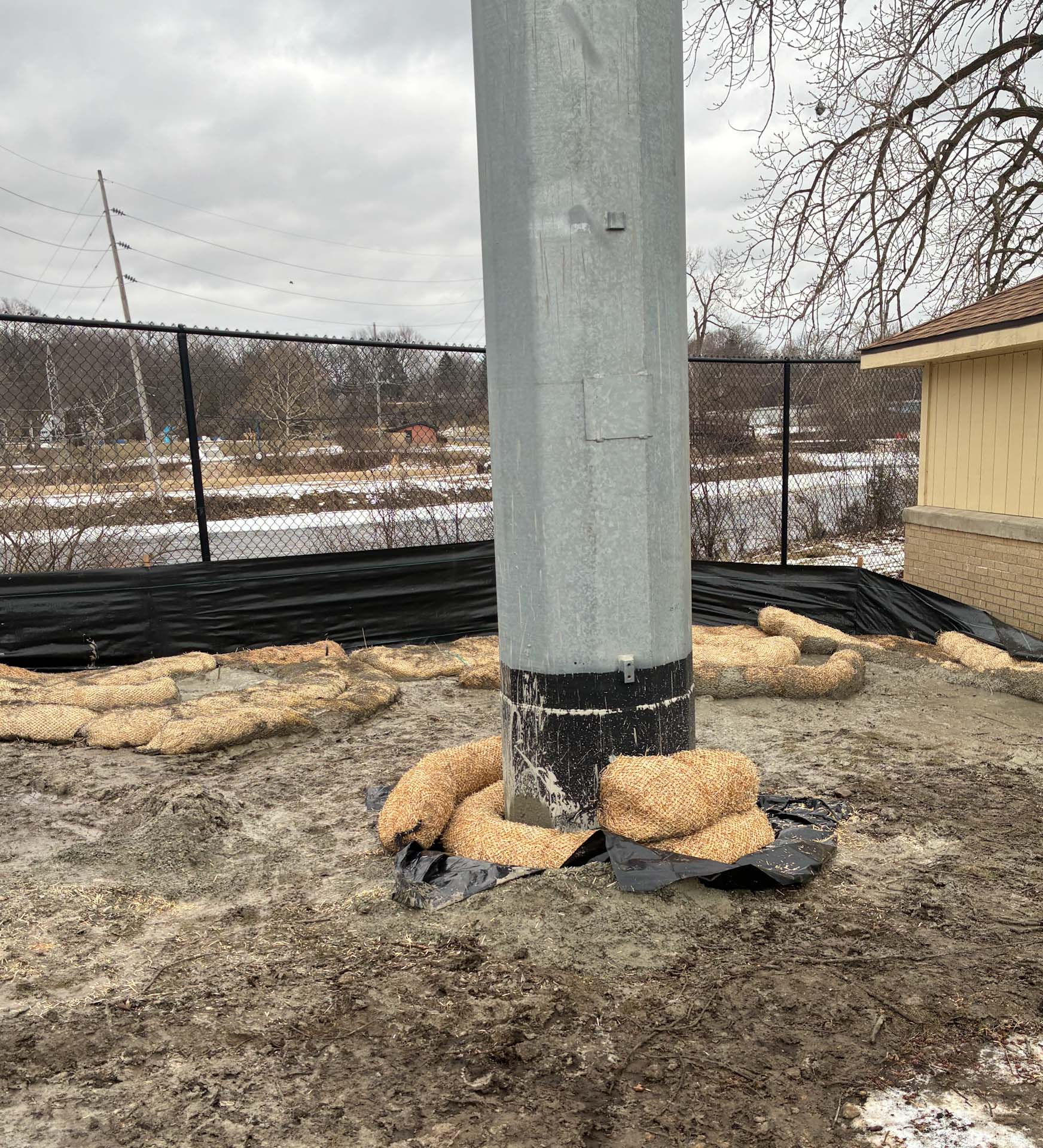
The first section (the below-grade section) was lowered into the shaft, plumbed for perfect verticality, and backfilled with concrete.
Quality Control: Before the above-ground sections were added, the concrete underwent compressive strength testing to ensure the foundation could handle the calculated stresses of the energized line.
- Assembly and Integration
Once the base was cured and verified:
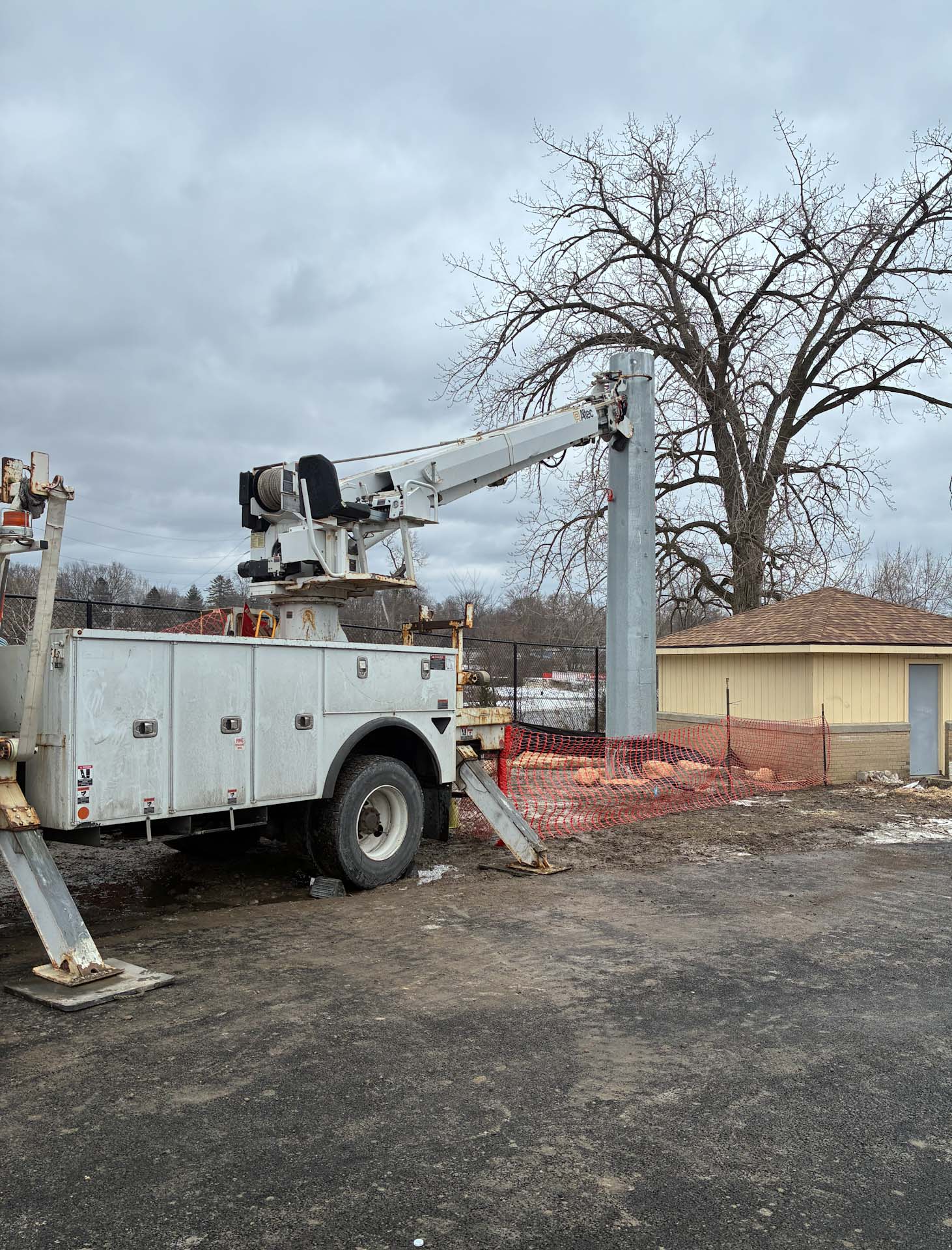
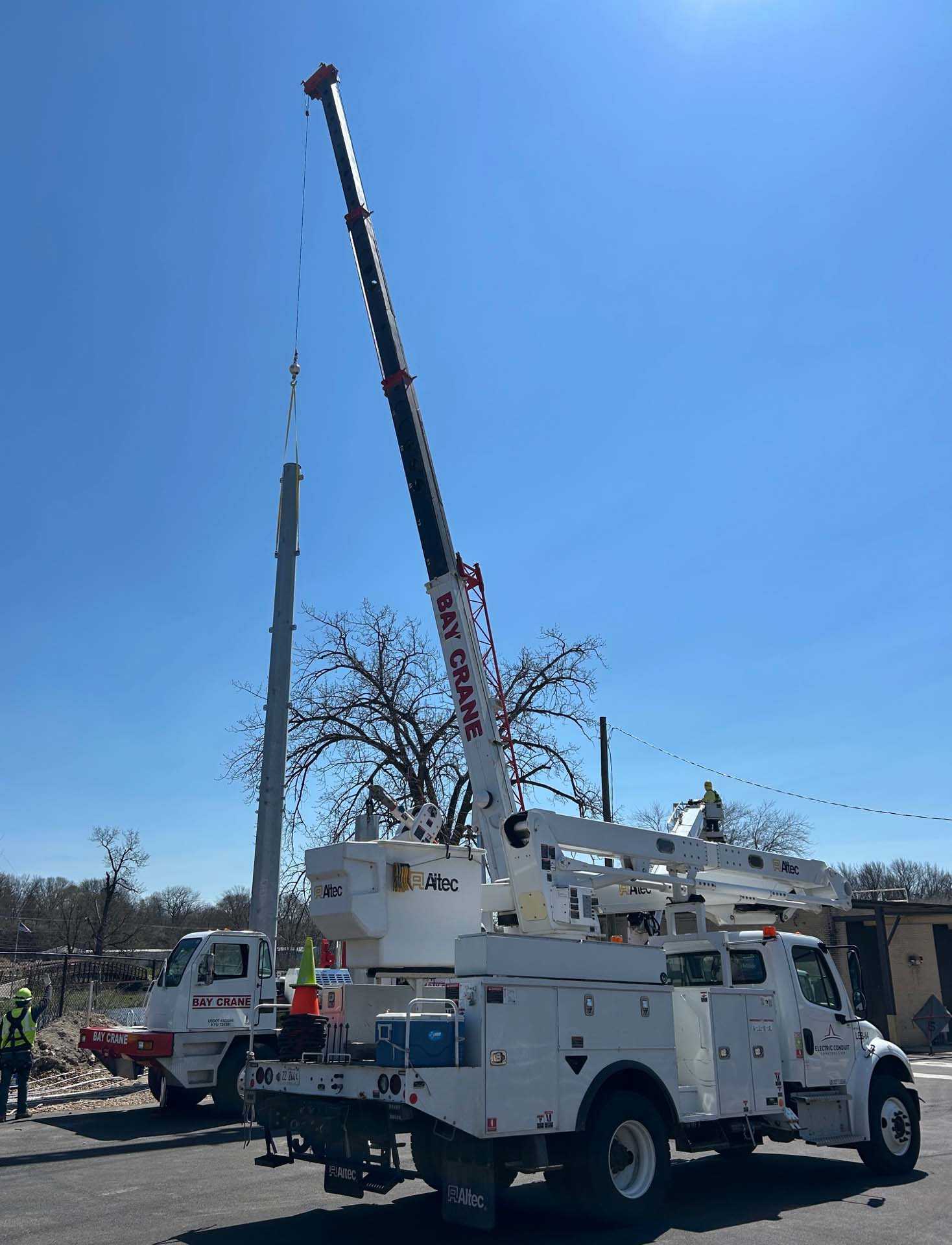
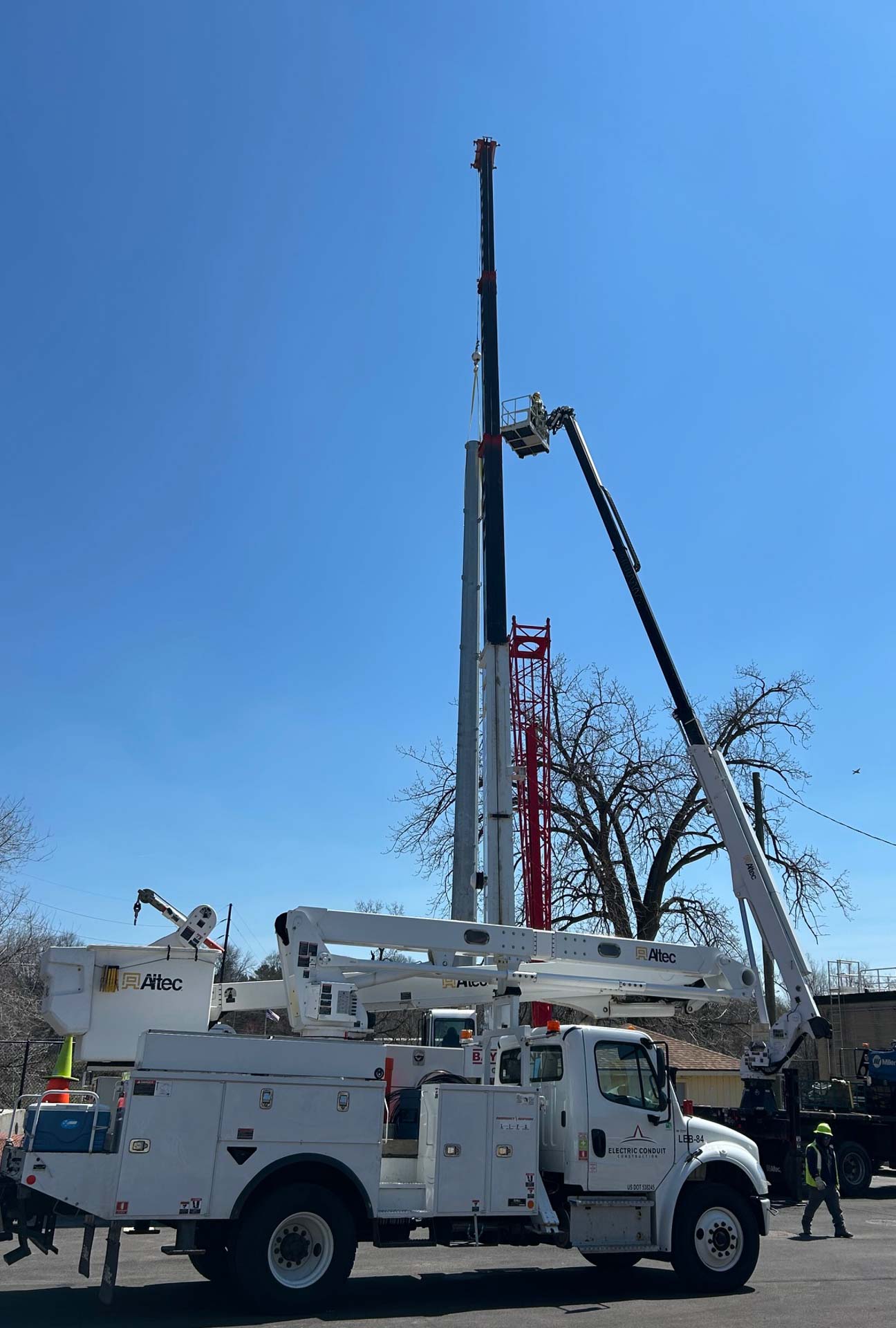
- The remaining tapered sections were stacked to reach the full 80-foot height.
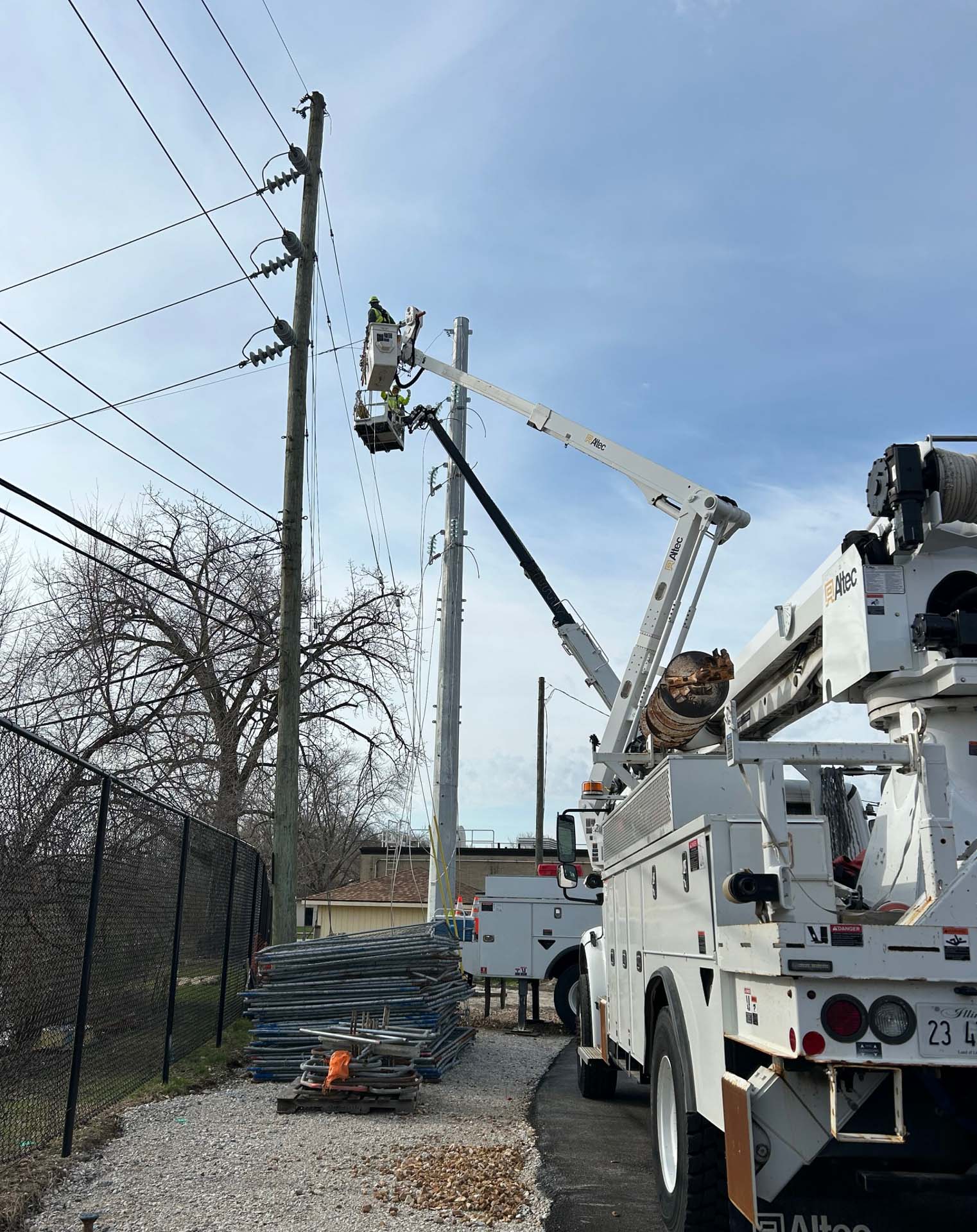
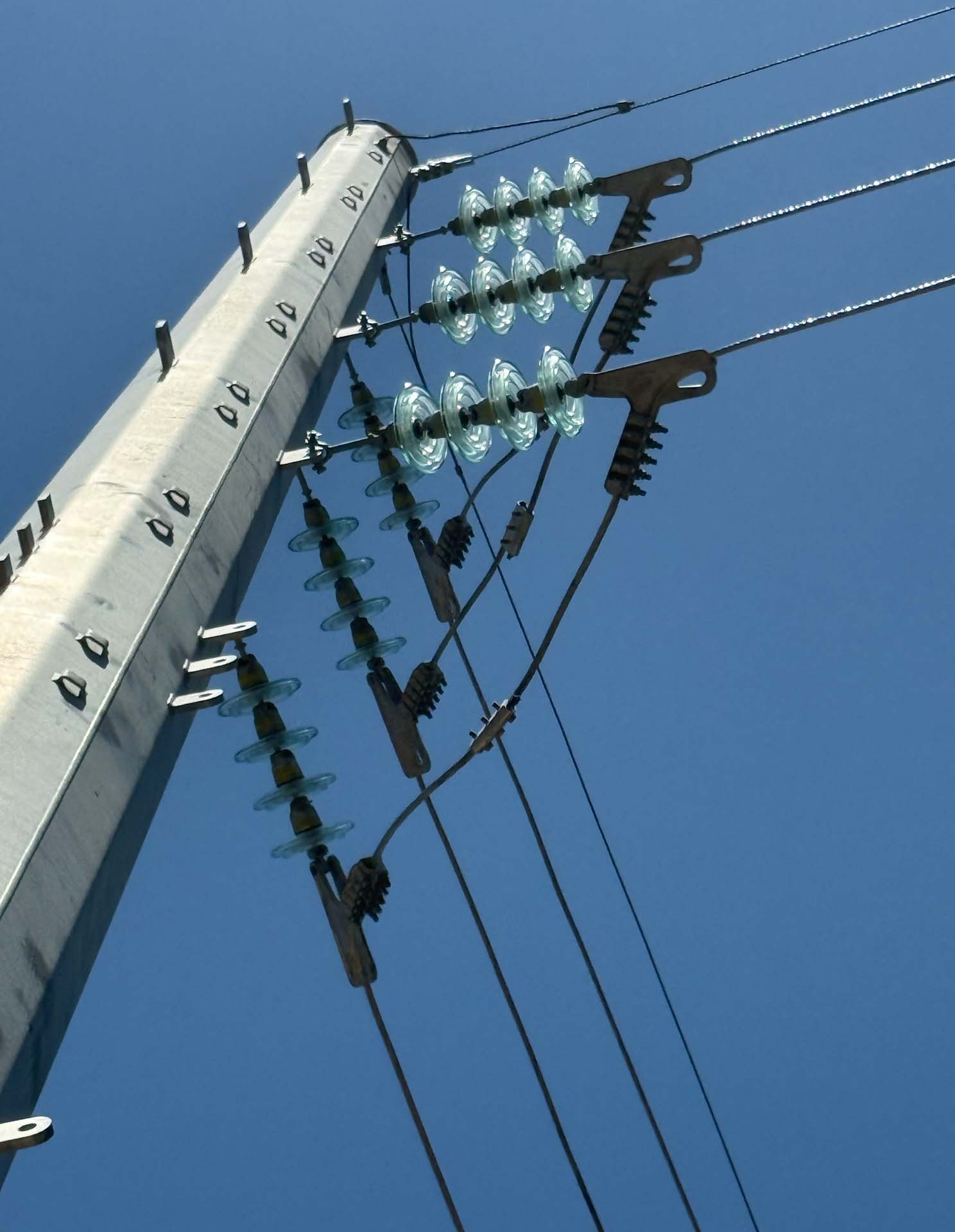
- Hardware and insulators were mounted to the steel frame.
- Splicing: Existing wires were disconnected, extended with splices, and secured using compression sleeves to ensure low-resistance, high-strength connections.
- Completion
The lines were re-energized, the old wooden pole and guy wires were disposed of, and the site was restored to its original condition.
Key Technical Outcomes
|
Feature |
Wooden Pole (Original) |
Steel Monopole (New) |
|
Height |
Standard Distribution |
80 Feet |
|
Support Method |
Guy Wires / Anchors |
Direct Burial (Self-Supporting) |
|
Material Property |
Flexible / Organic |
Rigid / Galvanized Steel |
|
Foundation |
Earth-Set |
Concrete-Encased (22' Deep) |
|
Footprint |
Large (due to guy wires) |
Minimal (pole diameter only) |
Conclusion
By replacing organic, flexible materials with engineered steel, ECC successfully improved the structural reliability of the 34 kV line. This case study demonstrates that while wooden poles remain a staple of the industry, the direct burial steel monopole is the superior choice for high-stress corner applications where space is limited and long-term rigidity is non-negotiable.